


Nafisathallah
Published on 24 November 2026




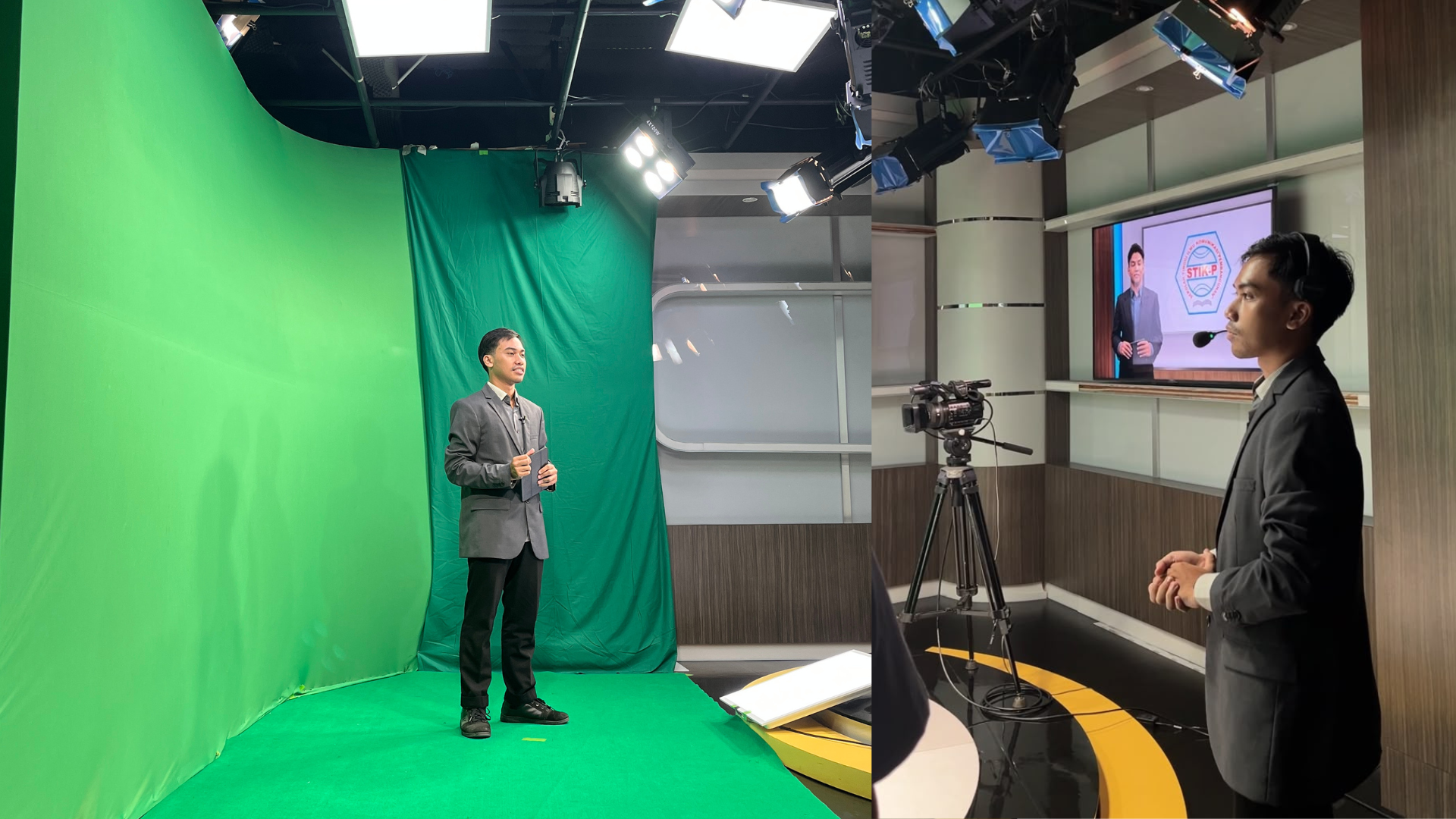
In most undergraduate journalism classrooms, news value is introduced through an unwritten rule that equates urgency with conflict, crisis, and political drama. Throughout my studies in Communication Studies at the Faculty of Social and Political Sciences, Universitas Sumatera Utara (FISIP USU), I was trained to evaluate stories through traditional newsroom instincts, searching for tension, institutional accountability, and breaking developments. Yet when I walked into the newsroom of DAAI TV Medan on June 22, 2026, to begin a 42-day broadcast journalism internship, I encountered a philosophy of media production that quietly inverted almost everything I assumed television news had to be.
Operating in Medan, North Sumatra, since June 30, 2007, under the auspices of the Buddhist Tzu Chi Foundation, DAAI TV is widely recognized across Indonesia as Televisi Cinta Kasih, or the Television of Universal Love. Within a crowded commercial broadcasting landscape driven by ratings and sensational headlines, the station defines itself as an aliran jernih, a clear stream committed to purifying human hearts and enlightening the world. Rather than treating humanistic storytelling as an occasional soft-news segment tucked at the end of a bulletin, DAAI TV builds its entire editorial identity around a humanistic culture anchored in three foundational values: truth (kebenaran), goodness (kebajikan), and beauty (keindahan). Experiencing how those three pillars function inside a daily broadcast workflow reshaped both my technical craft and my understanding of what journalism can contribute to society.
Rethinking Journalism Theory Beyond Sensationalism and Cynicism
Entering a humanistic newsroom forced me to confront an immediate intellectual tension between textbook media theory and real-world editorial choices. In university lectures, concepts such as framing and gatekeeping are frequently examined through a critical lens, emphasizing how media organizations distort public perception or filter information to serve commercial and political interests. At DAAI TV Medan, however, I observed how gatekeeping and framing operate as ethical instruments in service of constructive journalism. Stories centered on violent crime, sensational conflict, and partisan political disputes never cross the broadcast rundown. Instead, producers and reporters deliberately filter and frame everyday reality to spotlight social empowerment, cultural preservation, environmental stewardship, and ordinary citizens building quiet solutions in their communities.
At first, this editorial boundary unsettled one of my deepest assumptions as a journalism student. Classical press frameworks teach that a news organization's foremost civic duty is to act as an adversarial watchdog monitoring government power. Because DAAI TV maintains a strict commitment to non-partisan neutrality and refrains from political coverage, I initially wondered whether stepping away from watchdog reporting meant relinquishing an essential function of the press. Over weeks of working alongside Executive Producer Khairiah Lubis and the Medan production team, my perspective matured. A healthy public sphere does not rely on a single mode of journalism. While investigative outlets hold institutions accountable for failures, humanistic media perform an equally vital civic role by documenting social solidarity, nurturing empathy across diverse communities, and proving that constructive action is possible.
## Truth in the Unseen Details of Broadcast Production
Within DAAI TV's triad of values, truth (kebenaran) is never treated as a vague moral slogan; it is enforced through rigorous, behind-the-scenes editorial discipline. Assigned across three distinct programs, namely the KPID North Sumatra award-winning cultural magazine Bingkai Sumatera, the children's educational show Keliling Dunia Anak, and Citraloka, I quickly discovered that humanistic storytelling demands meticulous factual accuracy before a single frame ever reaches the screen.
Much of my daily routine in the newsroom revolved around the foundational administrative architecture that keeps broadcast journalism reliable. Every raw field recording had to be logged with frame-accurate timecodes so editors could trace visual transitions and verify context without guesswork. When transcribing field interviews, I combined speech-to-text tools with line-by-line manual verification against the original audio, ensuring that every local expression, proper name, and cultural term spoken by an interviewee was preserved faithfully. I also helped maintain the station's program archive database, cataloguing episodes by broadcast date, location, and source contact details, while aligning reporters' script leads with the formal broadcast rundown. In a newsroom dedicated to truth, honoring an interviewee's voice begins with getting every syllable and timecode right.
Goodness in Action: Listening Before Framing in the Field
If truth lives in editorial precision, goodness (kebajikan) becomes visible the moment a crew steps out into the field. Throughout my 42 working days, I joined senior reporters on five major weekend field assignments across Medan and neighboring Deli Serdang. Each assignment immersed me in communities rarely prioritized by mainstream news cycles: an orientation program for student scholarship recipients on July 5, the 2026 International Seminar on Children with Special Needs on July 12, the Tzu Chi University Science Camp on July 19, the Difabel Great Camp 2026 for persons with disabilities on July 25, and the Traditional Games Cultural Week on August 9.
Covering events such as the seminar on children with special needs and the disability empowerment camp revealed how profoundly a station's humanistic ethos changes the dynamics of an interview. In fast-paced hard news, field interviews often feel transactional, with reporters rushing to extract a dramatic ten-second soundbite before moving on. At DAAI TV, reporters invest time in genuine conversation before switching on the camera, creating a calm, respectful space where sources feel heard rather than extracted. Even technical details reflect that ethos: learning how to attach a clip-on microphone neatly without intruding on a speaker's comfort, or adhering to the station's strict dress code of tucked-in shirts and trousers, signals institutional respect toward the communities welcoming us.
This commitment to mobilizing goodness also extended beyond television segments into community outreach. During educational media visits hosted at the station, I designed cue cards for the masters of ceremony and documented students and community guests learning how humanistic broadcasts are made. Later, I joined the public relations team for social charity initiatives and DAAI Night 2026, a milestone celebration marking DAAI TV Medan's 19th anniversary under the theme Menggerakkan Kebaikan (Mobilizing Goodness). Reporting on the event and writing press releases that were subsequently published in local outlets such as Waspada.co.id, highlighting grassroots changemakers honored with the DAAI Inspiration Award 2026, showed me how a media institution can actively cultivate the very goodness it reports on.
Beauty in Craft: Visual Discipline, Studio Rhythm, and Digital Reach
The third pillar, beauty (keindahan), governs how humanistic stories are shaped aesthetically so that viewers experience calm, clarity, and emotional resonance. In television journalism, beauty is inseparable from technical discipline. While university practicums introduced basic camera handling as a flexible exercise, DAAI TV's Standard Operating Procedures treat visual stability and composition as non-negotiable standards. Every field sequence requires a tripod for steady framing, and camera operators systematically capture wide, medium, and close-up shots lasting roughly five seconds each so editors have a cohesive visual grammar to work with in post-production.
Inside the station, I experienced how sound, studio coordination, and digital design carry that aesthetic standard forward. In the soundproof voice-over booth, using Ableton Live 11, I practiced vocal articulation, breathing, and tonal warmth under my supervisor's guidance. Unlike the urgent, staccato delivery associated with breaking-news anchors, a humanistic voice-over requires measured pacing that leaves room for ambient sound and human emotion to breathe. On studio taping days for Bingkai Sumatera, I served as Floor Director and prompter operator, relaying timing cues via beltpack intercom between the Master Control Room and the presenter while logging clean takes on the rundown.
At the same time, DAAI TV Medan actively translates its values for contemporary digital audiences through its streaming platform DAAI+, which expanded to Smart TV ecosystems in 2026, as well as YouTube and social media. Working alongside the assistant producer, I edited short-form vertical videos and designed YouTube thumbnails in Canva for episodes exploring vegetarian wellness, spiritual tourism in Tarutung, meditation, and inspiring local vocalists. Designing digital hooks without resorting to clickbait taught me that visual beauty on digital platforms comes from clarity, dignity, and thematic consistency.
Bringing Truth, Goodness, and Beauty Together in My Final Project
All of these lessons converged in my individual capstone assignment: producing a six-to-fifteen-minute feature segment for Bingkai Sumatera titled Ayo Lestarikan Permainan Tradisional (Let's Preserve Traditional Games). The idea emerged organically from an earlier community encounter with Yayasan Laskar Pelangi, a local organization hosting a Traditional Games Cultural Week in Percut Sei Tuan District, Deli Serdang Regency. Recognizing how deeply their mission aligned with DAAI TV's humanistic values, I pitched the story to Executive Producer Khairiah Lubis and guided it through all eight stages of broadcast production: ideation, background research, drafting a formal Term of Reference, field reporting, scriptwriting, voice-over recording, video editing, and on-camera presentation.
On location, capturing children and community members playing traditional folk games such as terompah, bakiak, egrang (bamboo stilts), tarik tambang (tug-of-war), and pecah piring reminded me why human-interest journalism matters. Beneath the laughter and nostalgia lay a quiet cultural truth about intergenerational connection and community resilience in an era dominated by screens. Bringing that story to air, however, tested my endurance. My personal laptop, a 2015 Intel Core i5 machine, initially struggled with Adobe Premiere Pro 2020, forcing me to upgrade its memory from 4 GB to 12 GB DDR3L RAM and install a 256 GB SSD . In post-production, balancing cut-to-cut pacing, natural sound, and graphics meant undergoing multiple rounds of strict Quality Control revisions with camera operators, editors, and producers before stepping onto the studio floor to record my first-ever on-camera presenter segment.
When my segment finally aired on August 10, 2026, the closing day of my internship, I no longer viewed human-interest reporting as a gentle alternative to "real" journalism. Working inside DAAI TV Medan proved that journalism grounded in truth, goodness, and beauty demands just as much intellectual rigor, technical precision, and editorial courage as any breaking-news desk. For communication students preparing to enter a polarized and noisy media industry, my internship left one enduring conviction: when journalists commit to accuracy, empathy, and craft, storytelling does more than inform an audience; it helps restore our shared humanity.

