


GhinaRaudhatul
Published on 15 January 2026





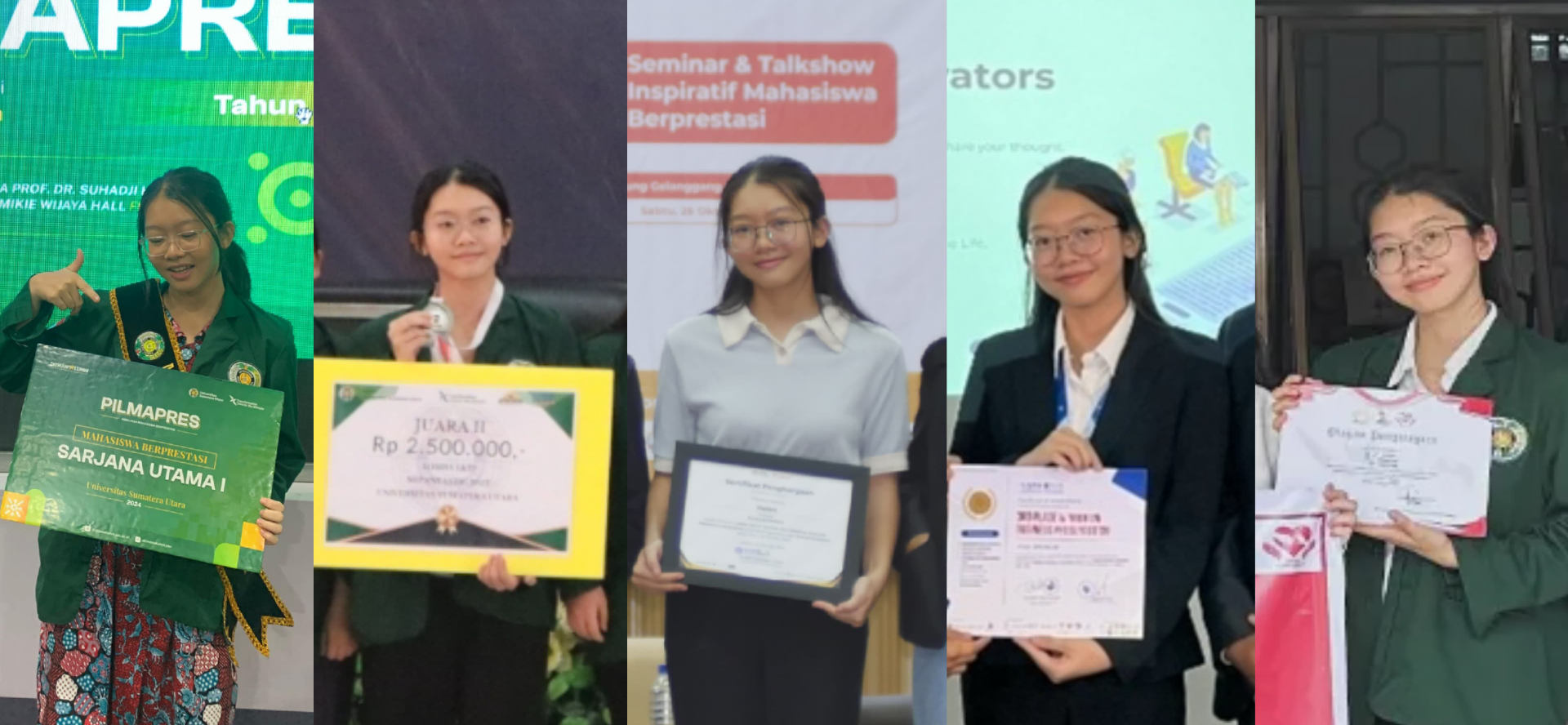
Publishing in a Scopus-indexed journal is widely regarded as one of the highest academic milestones, often achieved only after years of postgraduate study, extensive research experience, and deep immersion in scientific inquiry. For Helen, a graduate of the Faculty of Pharmacy at Universitas Sumatera Utara (USU), this achievement came much earlier than expected. Before completing her bachelor’s degree, she had already authored and co-authored four scientific articles published in reputable Scopus-indexed journals, an accomplishment that sets her apart as a young scholar who entered the global research arena far ahead of her academic stage.
Helen’s journey into the world of international publication began not from an established research background, but from a simple spark of curiosity. In the middle of her undergraduate program, she joined a research project led by her faculty lecturers. The project focused on the exploration of Indonesia’s natural resources and the development of herbal-based pharmaceutical products, an area rich in scientific potential but demanding rigorous methodological precision. What started as a small contribution gradually transformed into a deeper involvement as she proved her dedication and reliability.
Entering a laboratory environment filled with complex procedures and advanced instruments was initially intimidating. Helen had to learn techniques that were entirely new to her, adapt to structured data collection routines, and develop a sharp eye for scientific detail. However, each challenge strengthened her confidence. As her skills grew, so did the responsibilities entrusted to her. She became involved in literature reviews, data processing, and eventually in drafting sections of manuscripts destined for international journals. Her supervisors recognized her commitment and began to place her in more significant roles within ongoing research projects.
The process behind each of her Scopus publications involved intensive collaboration. Academic publishing rarely follows a straight line, and Helen experienced firsthand the non-linear path that every research paper must navigate. Manuscripts underwent multiple cycles of revision, and reviewer comments often required extensive reanalysis or additional experiments. For many young researchers, these critiques may feel discouraging, but Helen approached them as opportunities for growth. Every revision deepened her understanding of academic writing, methodological rigor, and the expectations of international journals.
Throughout her journey, she repeatedly highlighted the importance of strong academic relationships. For Helen, mentorship and professional networks were not supplementary elements of research—they were central. Good communication with lecturers and peers opened doors to opportunities she might otherwise never have encountered. When faculty members trusted her work ethic, they involved her in more advanced studies, expanding both her technical expertise and her exposure to scientific publication. This trust did not develop overnight; it was built through consistency, initiative, and a willingness to contribute whenever needed.
Despite the intensity of her research commitments, Helen did not isolate herself from campus life. She continued to take part in student activities and community initiatives, a balance she believes is vital for maintaining well-being and perspective. Engaging in activities beyond the laboratory kept her grounded and enriched her university experience. Her ability to balance demanding schedules demonstrated that excellence in research does not require sacrificing personal growth, but rather managing time with purpose and intention.
Helen’s four Scopus-indexed publications reflect more than academic competence. They embody her resilience, her willingness to learn from critique, and her belief in collaborative scholarship. Each article draws from Indonesia’s vast natural potential, showcasing how local biodiversity can contribute to global pharmaceutical research. Her achievements also highlight the value of involving undergraduate students in scientific work. Early exposure to research not only strengthens academic skills, but also encourages young scholars to see themselves as contributors to the wider scientific community.
To students who aspire to follow a similar path, Helen offers straightforward advice: start early, seek opportunities, and do not wait for the perfect moment. Progress, she believes, begins with taking the first step, however small. Her journey serves as a reminder that international publication is not an unattainable peak reserved for senior academics. With initiative, mentorship, and consistent effort, undergraduate students can also play a meaningful role in advancing knowledge.
Helen’s accomplishments demonstrate that academic excellence is defined less by age or academic degree and more by determination, curiosity, and openness to learning. Her story illustrates how impactful research begins not with expertise, but with the courage to participate. Through her four Scopus-indexed publications, Helen has shown that young researchers can shape scientific discourse—and that the path to global recognition often begins with a simple willingness to try.

