Chulalongkorn University
Published on 20 October 2026




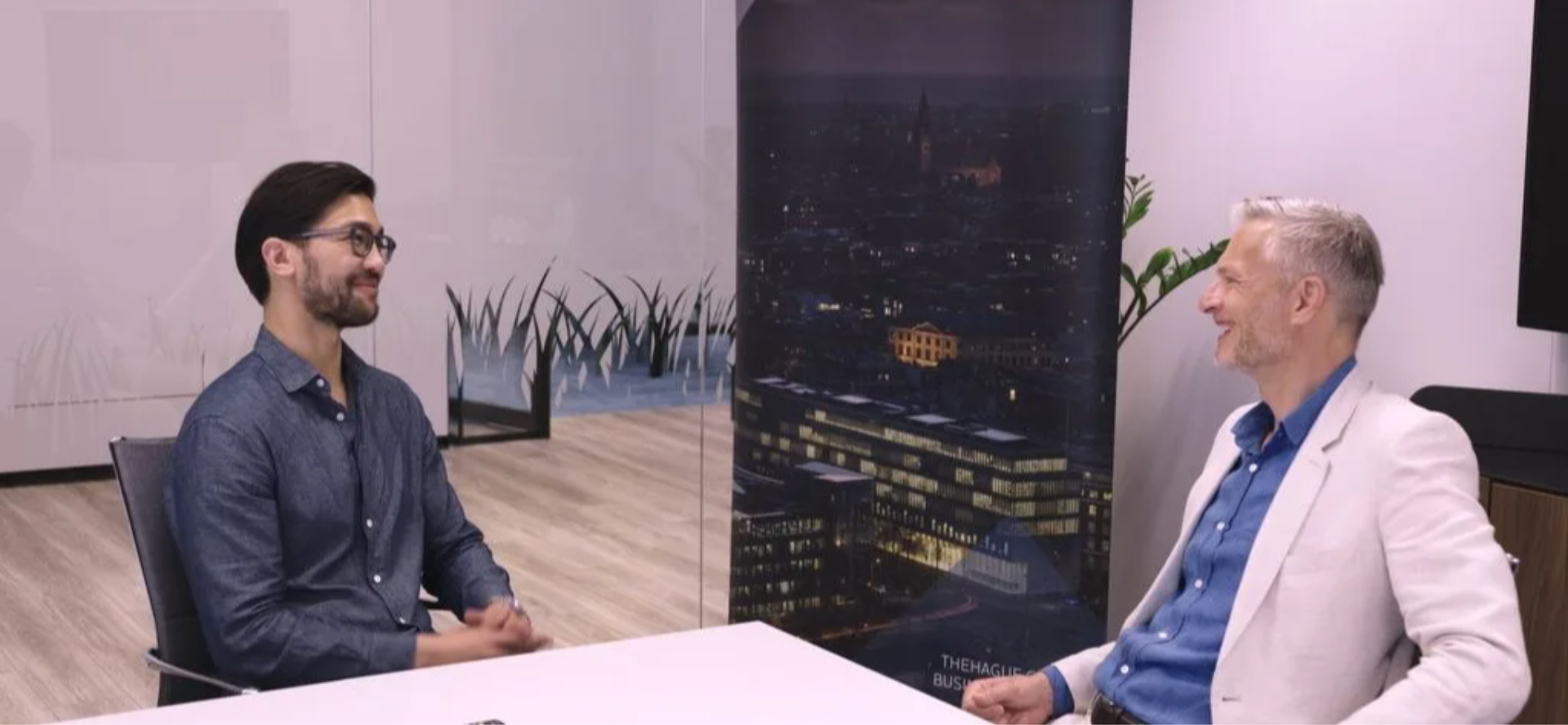
As the world faces increasingly complex challenges in sustainability and energy transition, technology alone may not be enough. For Marco de Jong, CEO and Founder of Euralinx and an exchange student alumnus of Chulalongkorn University, meaningful progress depends on collaboration across businesses, policymakers and cultures.
Highlights
· Collaboration Beyond Technology
· From Innovation to Real-World Impact
· Start Small, Build Gradually
· Lessons from Chula: Learning Across Cultures
· Watch the videos for this story
“No single region has all the answers. Europe and Asia each has its strengths, and we need each other now more than ever. If we can look beyond our own interests and work together, we can turn global ideas into real-world impact.” — Mr. Marco de Jong
Collaboration Beyond Technology
For De Jong, one of the biggest challenges in addressing sustainability and energy transition is not necessarily technology itself, but collaboration. Bringing together businesses, policymakers and governments requires an understanding of different regulatory environments as well as cultural perspectives.
“Every nation is needed. It all comes together through business, government, and regulations. Action at the national level alone is not enough.” De Jong said.
Through his work with Euralinx, the Netherlands-Thai Chamber of Commerce and ASEANCham EU, De Jong connects businesses and innovators across Europe and Asia, exploring how technologies and ideas developed in one region can contribute to challenges in another.
From Innovation to Real-World Impact
De Jong focuses on practical and scalable solutions that can make an impact in the short term. Rather than waiting for technologies that may take 10 or 15 years to become viable, he looks for innovations that are already available and can be implemented today.
One area he has explored is air quality. Technologies developed in the Netherlands, for example, could help reduce fine particulate emissions from trucks in Thailand and other Asian countries.
He also points to the importance of creating a viable business case for innovation. While zero-emission technologies remain an important long-term goal, solutions that can significantly reduce emissions today can also contribute to the transition.
“I prefer to look at innovations that are tangible and implementable in the short term.”
Start Small, Build Gradually
For young entrepreneurs, researchers and students working on sustainability and innovation, De Jong recommends starting with manageable projects and developing them over time.
“Start small and then build it up slowly. Often, when businesses start, the first idea is not necessarily the solution that is going to be successful.” — Mr. Marco de Jong
He believes that innovation is an iterative process. Successful solutions often emerge by testing ideas, learning from experience and adapting them to real-world conditions.
Lessons from Chula: Learning Across Cultures
De Jong’s approach to cross-cultural collaboration is also rooted in his experience as an exchange student at Chulalongkorn University. Originally planning to stay in Bangkok for only six months, he decided to extend his stay after realizing there was much more he wanted to learn.
Living in a dormitory with Thai students from different parts of the country helped him get to know Thai society and build friendships that have lasted well beyond his exchange program. He remains in contact with fellow students and continues to value the international network he built at Chula.
Looking back, De Jong sees his experience at Chula as an important part of his understanding of how people from different backgrounds can connect and collaborate.
“What I’ve learned over time is that no single region has all the answers. Europe and Asia each has its strengths, and we need each other now more than ever.”
For De Jong, the path toward a more sustainable future lies not only in developing new technologies, but in building the relationships, understanding and cooperation needed to turn those technologies into real-world solutions.
Read more at: https://www.chula.ac.th/en/highlight/429415/