Asfendiyarov National Medical University
Published on 13 January 2026






Sustainable development in Kazakhstan increasingly emphasizes not only economic growth and environmental responsibility but also the social and psychological well-being of the population. Among young people, one of the most overlooked yet impactful health issues is facial acne—a chronic inflammatory condition that most commonly affects individuals between the ages of 12 and 25. While acne is not life-threatening, its effects extend far beyond the surface of the skin. It can influence self-esteem, emotional resilience, social adaptation, and even academic motivation. Because of this, addressing acne in youth can be regarded as a component of broader sustainable development efforts: improving public health, reducing social inequality, and strengthening human capital.
Acne remains one of the most frequent dermatological problems among adolescents, students, and young adults, including those studying in medical universities. Despite its prevalence, the severity of the condition is often underestimated, and treatment is postponed until the appearance of painful inflammatory lesions, subcutaneous nodules, or cysts. These manifestations discourage social interaction, heighten stress, and contribute to negative body image. Acne’s causes are multifactorial and reflect the complex interaction of lifestyle, biology, and environmental conditions. Diet plays a notable role: foods with a high glycemic index, excessive dairy intake, and frequent consumption of oily or fried meals can stimulate inflammatory responses and sebum production. A deficiency of essential micronutrients—zinc, vitamins A, D, and E, as well as Omega-3 fatty acids—can further exacerbate acne. Hormonal fluctuations, especially elevated androgen levels, represent one of the primary internal triggers. External factors also contribute, such as the use of comedogenic cosmetics, mechanical friction on the skin, and exposure to pollutants. Psychological stress and poor sleep aggravate inflammation by disrupting the sebaceous glands’ natural functions, making acne more persistent and more severe.
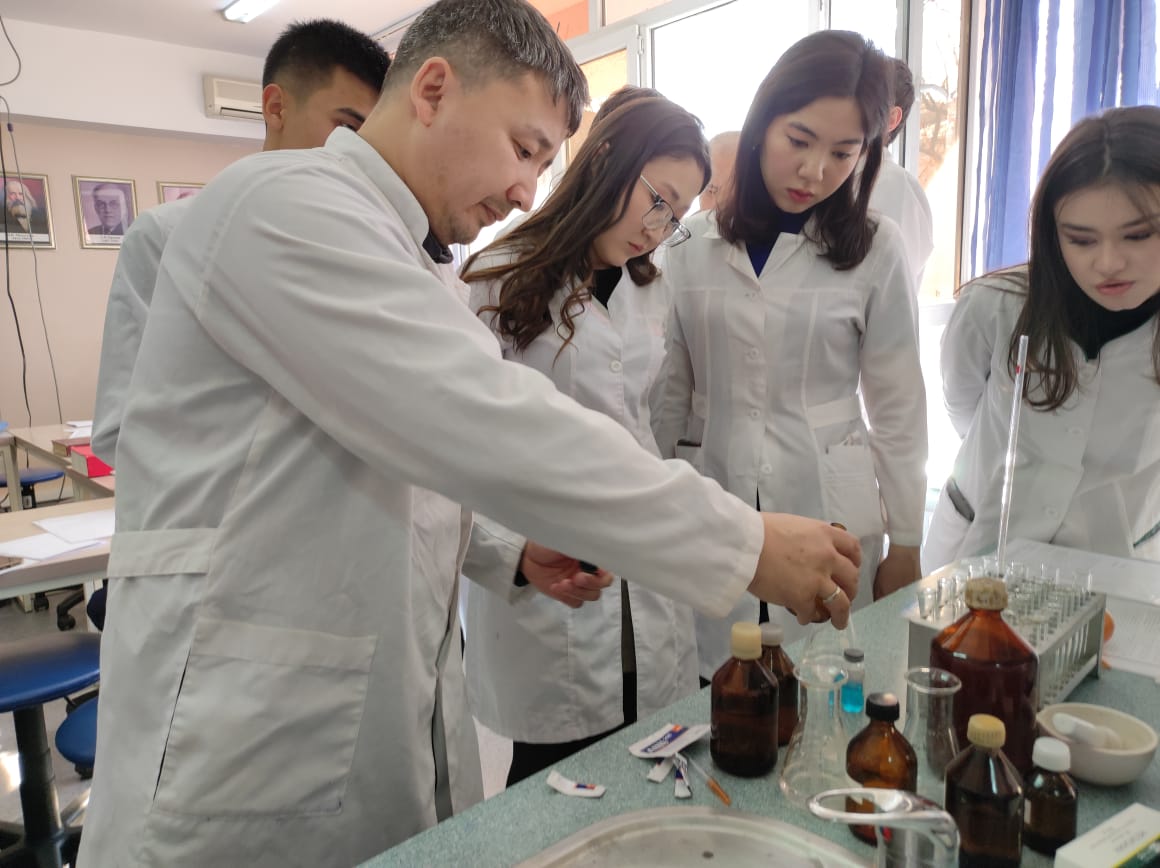
Recognizing the combined medical, psychological, and social implications of acne, researchers at the Department of Pharmacognosy with a course in Botany at S.D. Asfendiyarov Kazakh National Medical University have developed an innovative topical spray aimed at reducing inflammation, normalizing sebum production, and accelerating skin healing. Under the scientific supervision of Professor G.M. Sayakova, the team created a formulation that integrates dermatologically active ingredients with proven therapeutic effects. The spray is designed not only to treat visible skin symptoms but also to ease the emotional burden associated with acne, thereby supporting both physical and mental well-being.
The formula includes herbal extracts of Glycyrrhiza glabra and Aloe vera, which soothe irritation and provide antioxidant protection. Azelaic acid—present at a therapeutic concentration of 15%—serves as one of the primary active agents, offering antibacterial and anti-inflammatory benefits while preventing pore blockages. Niacinamide at 5% strengthens the skin barrier and reduces redness, while Zinc PCA reinforces antibacterial protection and helps balance sebum secretion. Panthenol promotes skin repair and reduces sensitivity, and vitamin E offers additional antioxidant stability. Glycerin supports hydration, ensuring that the formulation remains gentle despite containing potent therapeutic ingredients. Purified water serves as the base, ensuring a clean, stable, and easy-to-use spray.
The product is intended for application once or twice daily on cleansed skin. It can be sprayed directly onto the face or applied with a cotton pad to targeted inflamed areas. For safety, it is recommended for external use only, avoiding the eye area, with discontinuation advised if irritation occurs. The spray should be stored at room temperature and kept away from direct light to preserve its stability.
One of the key strengths of this development is its balanced approach: while azelaic acid performs the heavy therapeutic work, the inclusion of aloe, panthenol, and glycerin ensures that the formulation remains suitable even for sensitive skin. The combined anti-inflammatory and antibacterial elements—niacinamide, Zinc PCA, and Glycyrrhiza glabra extract—provide a comprehensive effect aimed at reducing pustules, painful nodules, and overall inflammation. Over time, users can expect improvements in skin texture, tone, and comfort, with reduced sensitivity and fewer episodes of irritation.
Although standardization studies of the final dosage form are ongoing, early results are promising. Preliminary testing conducted in several cosmetic clinics in Almaty has demonstrated noticeable improvements in skin condition and tolerance among users, motivating further research and refinement of the product.
Acne is more than a cosmetic concern—it is a condition that affects confidence, social participation, and emotional stability. The newly developed spray represents not only a dermatological innovation but also a step toward supporting the psychological well-being of young people. By helping individuals achieve clearer skin, it may also help them gain clearer emotions, greater confidence, and healthier social integration, contributing to the long-term sustainable development of Kazakhstan’s youth.