Chulalongkorn University
Published on 22 June 2026




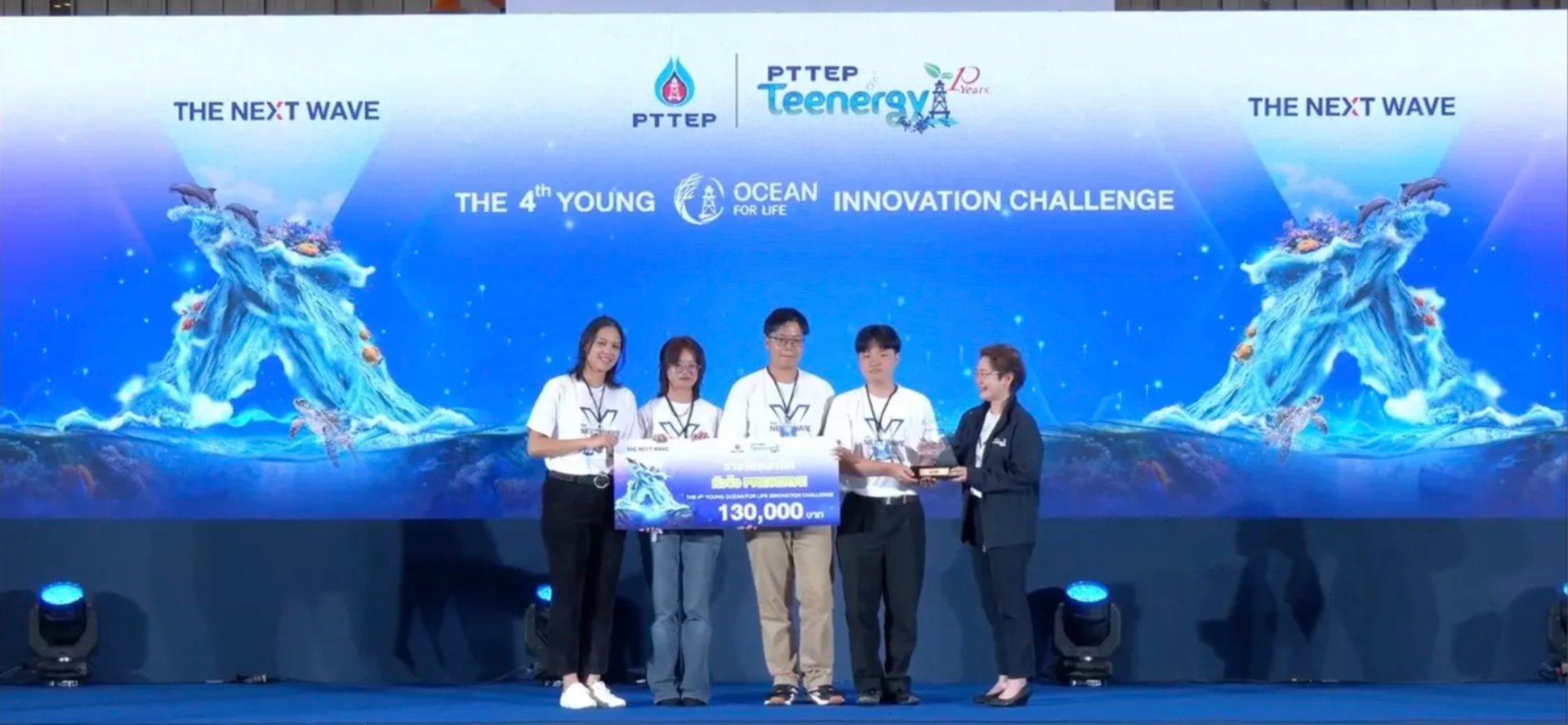
The Faculty of Veterinary Science, Chulalongkorn University, extends its congratulations to Ms. Donjai Watcharapolmek, Ms. Lillarawat Kitjavas, Mr. Jin Kulsathitporn, and Mr. Wintakorn Kampira, veterinary students of Chulalongkorn University, for winning first prize in the 4th Young Ocean for Life Innovation Challenge under the 10th year of the PTTEP Teenergy project.
The team received the award for their project, “Turtle Wave Energy Generator,” under the theme “Preserve,” which had been selected from applicants nationwide to advance to the final round of 15 teams before ultimately winning first place. The award was granted in recognition of their presentation of ideas and innovations aimed at promoting sustainable marine resource conservation. The competition and award ceremony were held at Suralai Hall, 7th Floor, ICONSIAM.
The “Turtle Wave Generator” was developed in response to a key challenge in sea turtle hatchery and nursery ponds, which are typically characterized by still water or limited water circulation. This contrasts sharply with the natural marine environment, where waves and currents are constantly in motion. As a result, hatchling and juvenile turtles raised in artificial ponds may lack natural environmental stimuli, become less active, experience stress, or exhibit undesirable behaviors such as aggressive biting among individuals. Such behaviors can lead to injuries and increase the risk of infection.
To address this issue, the development team began by consulting with veterinarians and sea turtle caretakers to better understand the underlying causes and potential solutions. Experimental trials were then conducted with juvenile green turtles aged approximately six to seven months by introducing controlled water currents into nursery ponds. Preliminary findings revealed that ponds equipped with water-current systems experienced a reduction in biting behavior of more than 72 percent compared with ponds without water circulation. These results highlighted the potential of creating a more naturalistic environment to enhance animal welfare.
Building on these findings, the team developed the “Turtle Wave Generator,” an innovative water-current generation device that can be retrofitted into existing nursery ponds without the need for major reconstruction. The system features a Flow Bar current-generation mechanism, animal safety protection components, an adjustable mounting system compatible with various pond designs, and an application-based control platform that enables caretakers to monitor and manage multiple ponds simultaneously in real time.
A key strength of the innovation lies in its application of Environmental Enrichment principles to sea turtle husbandry. The device allows users to adjust both the intensity and pattern of water currents according to the turtles’ developmental stages. By simulating natural aquatic conditions, it encourages normal swimming behavior, reduces stress, and helps prepare juvenile turtles for successful release back into the wild.
Looking ahead, the development team plans to expand the application of this technology to the care and rehabilitation of other rare and vulnerable marine animals, including dugongs, dolphins, and various marine species undergoing recovery in conservation centers and aquariums. The team envisions the technology as a valuable tool for improving the welfare of marine animals in managed environments, enhancing rehabilitation outcomes, and supporting their sustainable return to natural habitats.
This achievement reflects the potential of Chulalongkorn University students to apply academic knowledge alongside creativity and teamwork to develop innovations that benefit society and the environment while making tangible contributions to the sustainable conservation of Thailand’s marine resources.
Read more at: https://www.chula.ac.th/en/news/411923/