National Taiwan University
Published on 12 November 2026




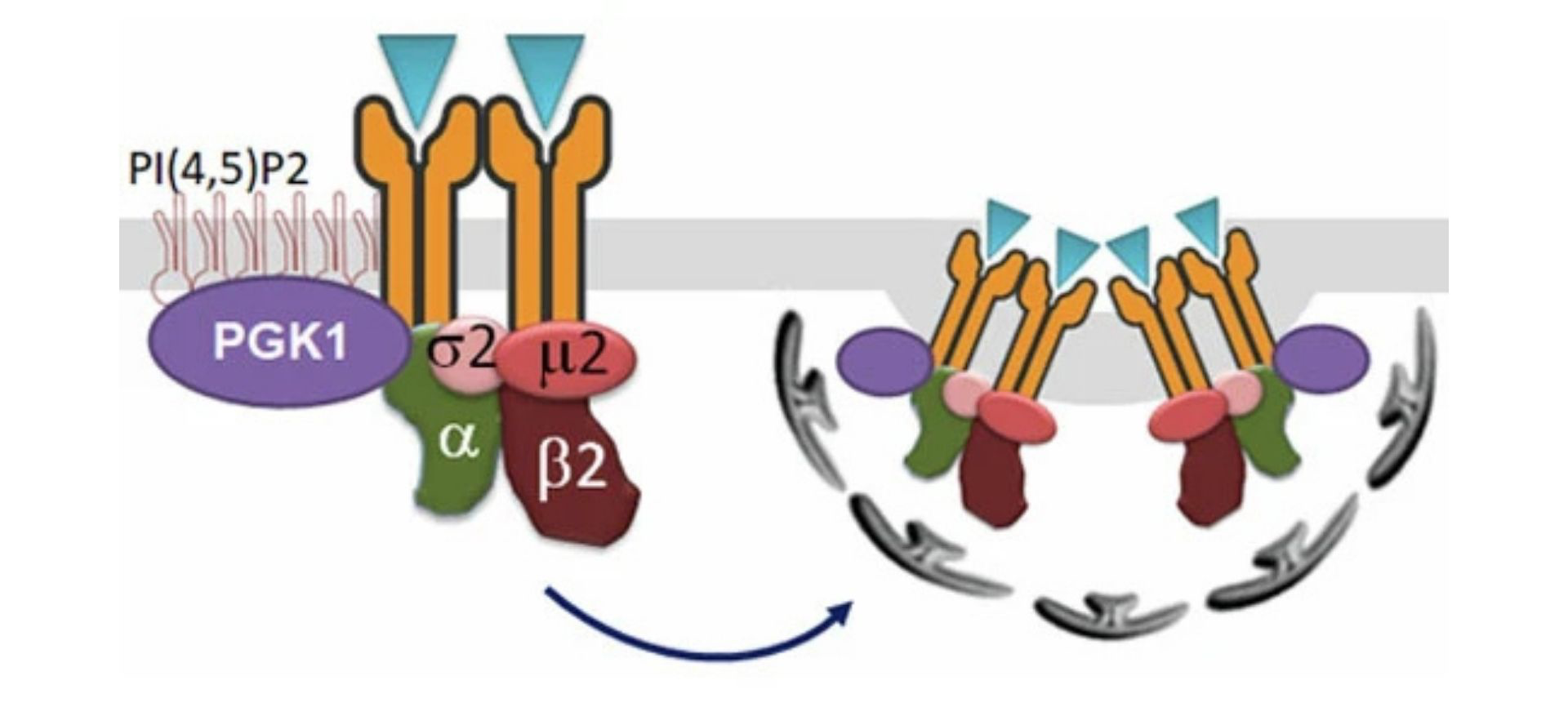
As cellular biology continues to decode the intricate mechanisms of human health, understanding how cells transport vital nutrients and signals has become a cornerstone of modern molecular research. National Taiwan University (NTU) recently achieved a major breakthrough by unveiling an unexpected, non-canonical function of the well-known metabolic enzyme phosphoglycerate kinase 1 (PGK1). Published in the prestigious journal EMBO Reports, the study by Associate Professor Jia-Wei Hsu’s team at the Institute of Biochemical Sciences demonstrates how PGK1 acts as a crucial regulator in the cellular endocytosis process.
To maintain optimal function, human cells act like bustling cities, relying on endocytosis to receive essential packages such as epidermal growth factor receptors (EGFR) and transferrin receptors (TfR) through the cell membrane. Traditionally, this process depends on the adaptor protein 2 (AP2) complex to sort and transport these cargoes. Spearheaded by PhD candidate Shao-Ling Chu as the primary researcher, alongside team members Yu-Tzu Chang and Che-Yu Hung, the study uncovered that PGK1 independently moonlights as a "super sorter". Bypassing its standard glycolytic catalytic activity, PGK1 physically stabilizes the AP2 complex and directly engages with the cargoes, significantly reinforcing the precision and efficiency of endocytosis. The research was further strengthened by mass spectrometry analysis provided by Professor Chia-Jung Yu of Chang Gung University.
This paradigm-shifting discovery redefines the conventional understanding of metabolic enzymes, proving their capacity to perform complex, cross-disciplinary roles as transport regulators. The success of this research was made possible through joint support from the National Science and Technology Council (NSTC), the Ministry of Education (MOE), NTU, and Academia Sinica. By bridging biochemistry and cellular logistics through robust institutional collaboration, NTU continues to elevate its research capacity to solve complex biological puzzles and pioneer next-generation therapeutic strategies.