SKKU
Published on 29 October 2026




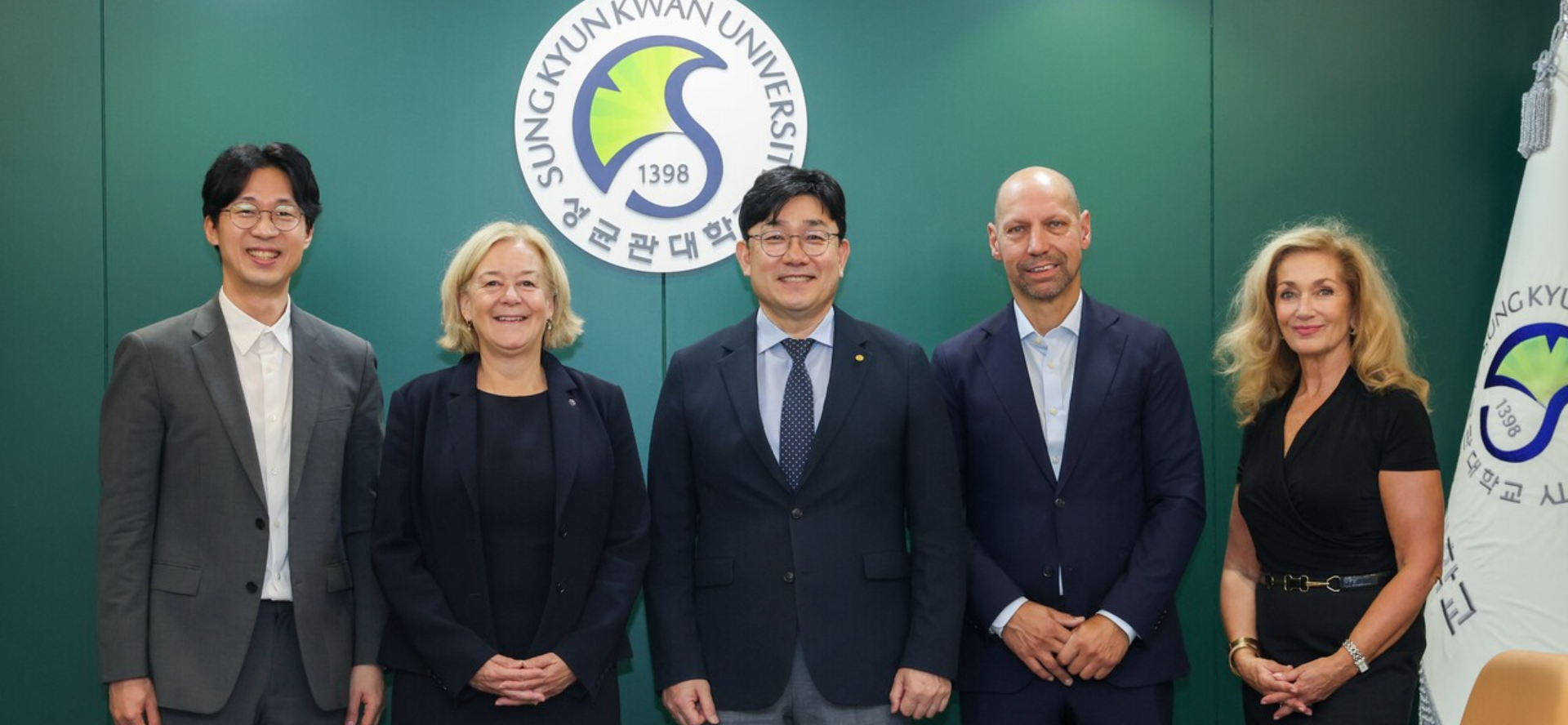
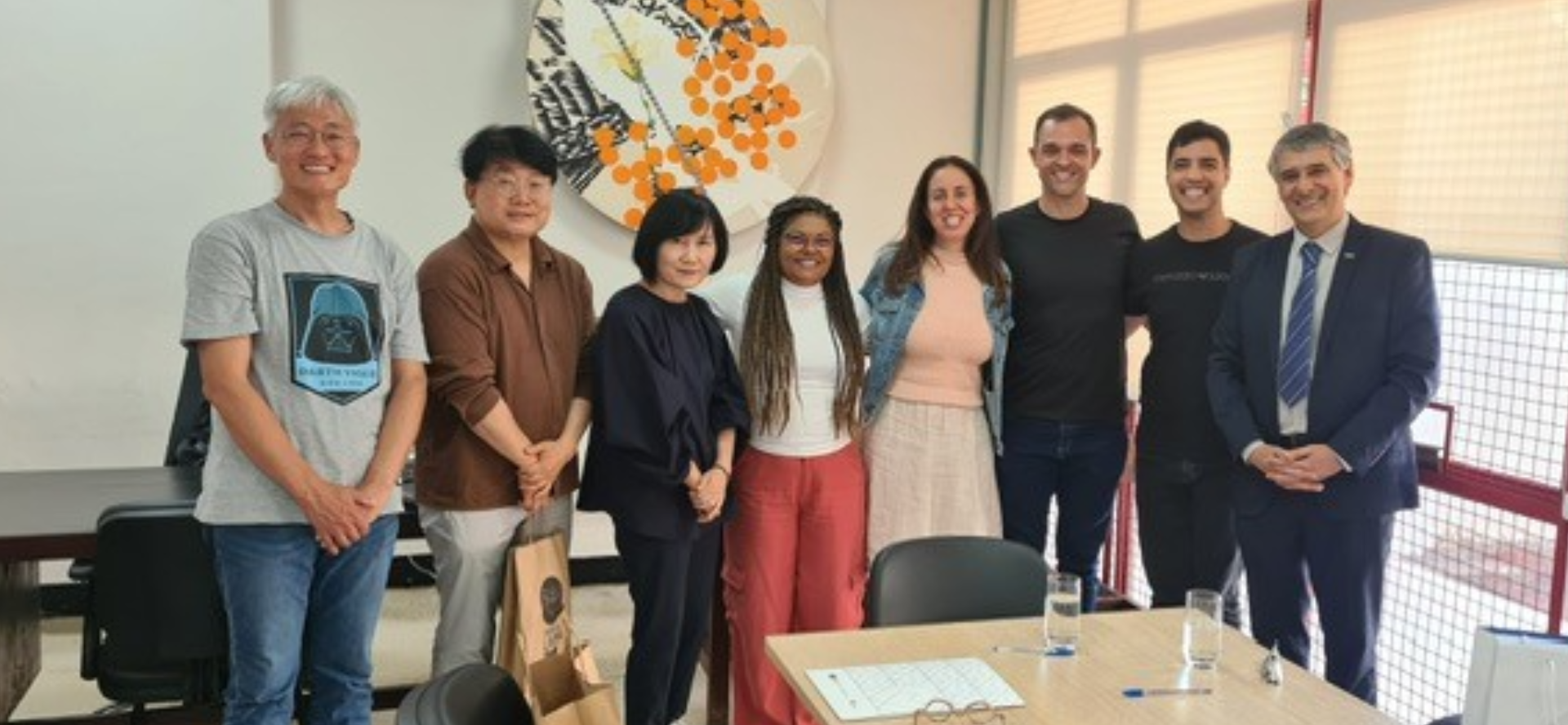
Sungkyunkwan University (SKKU) held a meeting with a delegation from Riksbankens Jubileumsfond (RJ), a Swedish foundation supporting research in the humanities and social sciences, at the 600th Anniversary Hall on October 12.
The three-member RJ delegation, including CEO Marika Hedin, met with Vice President for Humanities and Social Sciences Campus Hoon-Seok Choi, Dean of Academic Affairs Sang Hoon Bae, and faculty members in the social sciences to discuss ways to expand international joint research and academic exchanges.
The meeting aimed not only to strengthen institutional cooperation between SKKU and RJ but also to promote exchanges between social sciences researchers in Korea and Sweden and lay the groundwork for supporting international collaborative research.
RJ is a private research funding foundation established in the 1960s with funding from Sweden’s central bank. It primarily supports academic research in the humanities and social sciences. Since 1965, RJ has provided approximately USD 2 billion (KRW 2.7 trillion) in cumulative research funding. The foundation also offers funding opportunities to international researchers collaborating with Swedish scholars, encouraging international joint research and the development of academic networks.
During the meeting, CEO Hedin introduced RJ’s major research funding programs and international collaboration policies. She explained that RJ places particular emphasis on a bottom-up approach, allowing researchers to propose their own research topics, and operates a range of funding schemes, from three-year research projects to large-scale, long-term research programs lasting six to eight years. She also introduced the Research Initiation program, which supports researcher exchanges and the development of research proposals during the early stages of international collaboration.
Professor Jeong-Woo Koo of the Department of Sociology shared his experience conducting collaborative research with Professor Amy Alexander of Political Science at the University of Gothenburg in Sweden and other researchers through RJ’s Research Initiation funding. Researchers from Korea and Sweden have visited each other’s countries and held joint workshops. Building on these activities, they are currently preparing a proposal for a longer-term international collaborative research program.
SKKU faculty members attending the meeting also introduced their respective research areas and experiences in international collaboration. Professor Daeun Park of the Department of Psychology presented her ongoing collaborative research on generative AI and human motivation with international research institutions, including the University of Chicago and the University of Hong Kong. Professor Heejung Jun of the Department of Public Administration shared examples of research collaboration with scholars in Germany, Poland, and the Czech Republic on immigration, sustainability, and smart cities. Professor Tae Hyun Baek of the Department of Media and Communication discussed his recent experience applying for Horizon Europe research funding with researchers in the United Kingdom.
Professor Taehyun Baek of the Department of Media and Communication discussed his recent experience applying for Horizon Europe research funding with researchers in the United Kingdom. Professor Jihyun Sung of the Department of Child Psychology and Education introduced her international collaborative research in child and adolescent development and education with researchers from the United States, Australia, Austria, Singapore, and Hong Kong. Professor Won Bin Cho of the Department of Political Science and Diplomacy also explored potential collaboration with European researchers based on his comparative research on political attitudes and political polarization in Korea and East Asia.
Another major topic of discussion was the potential to expand research collaboration between Korean and European scholars through Horizon Europe. Since 2025, Korea has participated as an associated country in Pillar II of Horizon Europe. Cluster 2, which addresses democracy, governance, cultural diversity, and social change, was highlighted as a new opportunity for international collaborative research in the social sciences. Participants agreed that practical institutional support from universities is urgently needed to facilitate the formation of international research consortia and the research funding application process.
The visit provided an opportunity to expand SKKU’s international research network in the social sciences and strengthen its engagement with one of Sweden’s major research funding organizations. Participants reaffirmed the importance and necessity of international collaborative research and agreed to continue exploring concrete opportunities for future research cooperation.