

Josephinee
Published on 21 October 2026




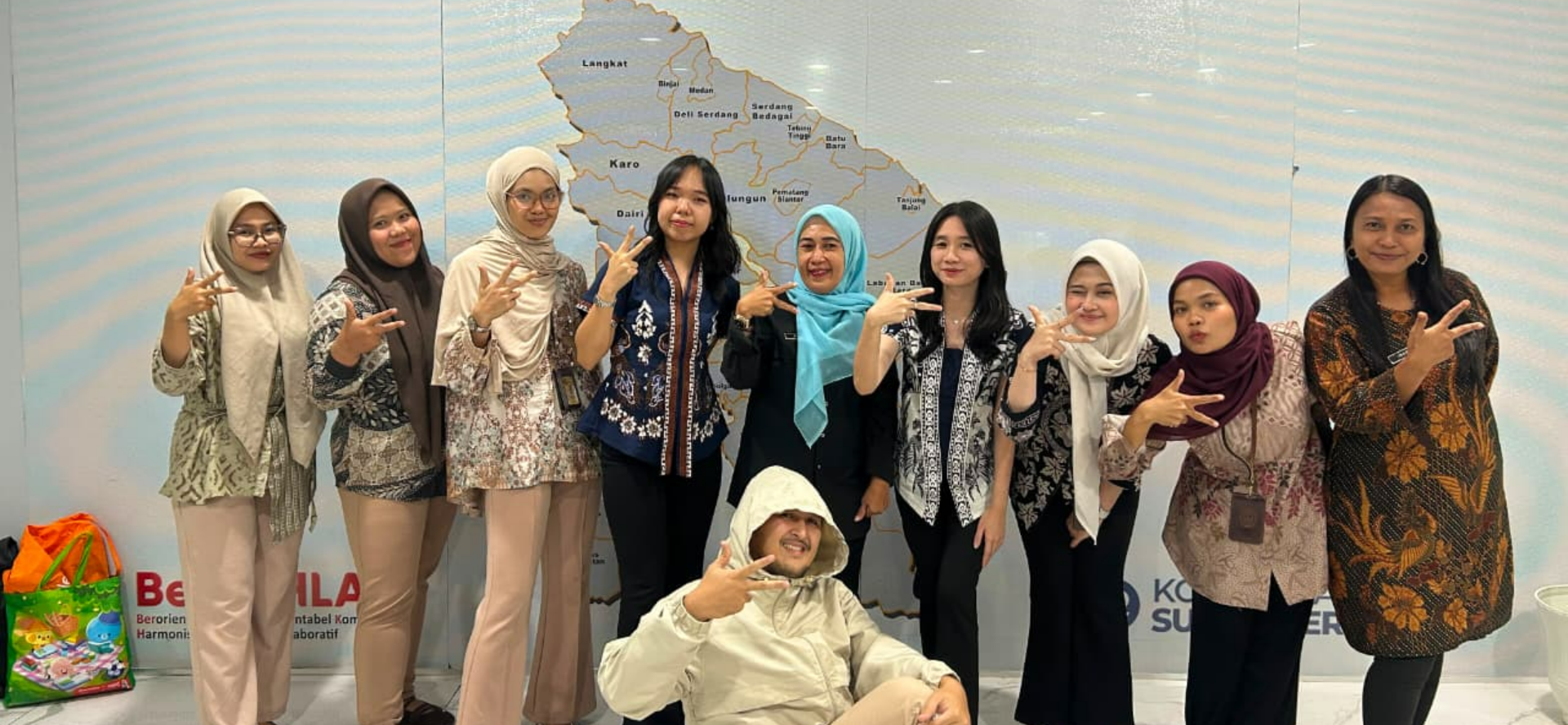
Public relations looks orderly in a textbook. Inside a government office, it moves with the schedules of its leaders and the pace of public issues. From June 15 to August 14, 2026, I interned at the Bureau of Leadership Administration of the North Sumatra Governor's Office as a Communication Studies student at Universitas Sumatera Utara. Placed in the division that prepares materials and communication for the region’s leaders, I learned that the real skill in this field is keeping up.
My first lesson was about rhythm. There were lots of tasks with different degrees of urgency, and sometimes within the hour the leader’s agenda would change. Initially, it was not easy to meet all the expectations at once. By observing how the staff worked, asking questions early, and ordering my tasks by deadline, I gradually learned to keep pace with the office.
The second lesson was how much work goes on behind a single public message. For example, a photo collage of the Deputy Governor’s activities on a monthly basis, a health campaign flyer, or a short video for a morning exercise session all started off as raw material. As an intern, I was assigned to design graphics, edit footage, and curate photographs, and I saw that public trust is built through many small decisions about wording, layout, and tone.
Fieldwork showed me a different side of communication. I joined coverage of public demonstrations in front of the Governor’s Office, including a rally by online motorcycle taxi drivers, and spoke briefly with people on site. Shooting in a crowded, unpredictable setting meant making split-second decisions about what mattered, which shot told the story best, and how to stay respectful of everyone present. No lecture had prepared me for that kind of timing.
The biggest challenge for me was finding a middle ground between creativity and institutional formality. My early concepts sometimes felt too casual for a government account, and my supervisors asked me to adjust them. Rather than treat this as a setback, I studied the bureau’s previously published content to understand its voice, and I discussed my ideas before production began. The results still had a fresh look, but they now carried the dignity expected of a public institution.
Revision turned out to be part of the craft. Designs and videos often came back with changes in structure, information, or visuals, and each round improved the final piece. I stopped taking feedback personally and began to see it as shared ownership of the message. That shift made me a calmer and more useful team member.
The internship’s most memorable project was a set of materials for Indonesia’s 81st Independence Day. I joined brainstorming sessions, helped develop the script and storyboard for a commemorative video, filmed footage, and took part in editing. I also helped devise a cheer for a competition, a joint effort between our staff and the Dharma Wanita Persatuan (DWP) organization. Watching an idea grow from a meeting-room discussion into finished content showed me how collaboration drives public communication.
All in all, what I learned from these two months is a more realistic picture of public relations. When theories explain what a message should contain and which media can carry it, practices show how this works under time pressure, within institutional rules, and among people with different expectations. Being technically skilled is important, but so is being adaptable, patient, and open to feedback. I’m sincerely grateful for the guidance from my supervisors and the staff.

