National Taiwan University
Published on 22 October 2026




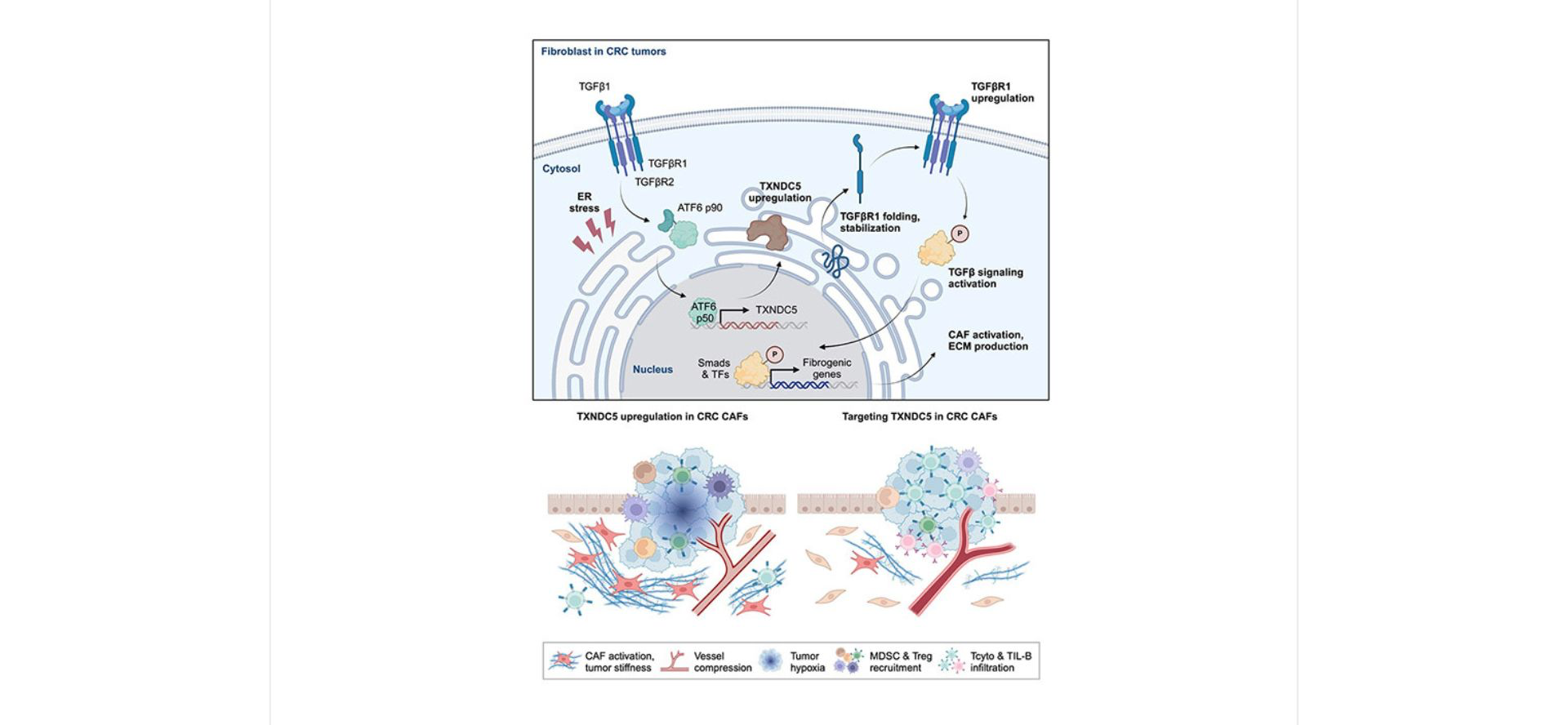
As global healthcare faces significant challenges in treating advanced malignancies, overcoming immunotherapy resistance has become a paramount goal. National Taiwan University (NTU) has achieved a major medical breakthrough by uncovering a crucial mechanism that drives tumor fibrosis. Published in Nature Communications, the study led by Professor Kai-Chien Yang at the NTU Graduate Institute of Pharmacology reveals how the endoplasmic reticulum protein TXNDC5 modulates cancer-associated fibroblasts (CAFs), offering unprecedented hope for mesenchymal-type colorectal cancer.
The university's breakthrough addresses the dense fibrotic barriers in the tumor microenvironment that typically block immune cells. By analyzing human and murine data, Professor Yang's team found that high TXNDC5 levels stabilize the TGFβ receptor (TGFBR1), creating a malignant loop of continuous fibroblast activation. When researchers depleted TXNDC5 in specific models, tumor stiffness decreased dramatically. This dismantled the suppressive barrier, reduced vascular compression, and successfully allowed cytotoxic T cells to infiltrate the tumor.
Looking forward, this vital remodeling of the tumor microenvironment not only curbs tumor growth but also significantly enhances the efficacy of anti-PD-1 immune checkpoint blockade therapy. By illuminating this critical signaling axis, NTU and its dedicated researchers continue to leverage pioneering biomedical capacity to address complex clinical challenges, establishing a scalable foundation for next-generation targeted cancer treatments.