Ajman University
Published on 21 September 2026




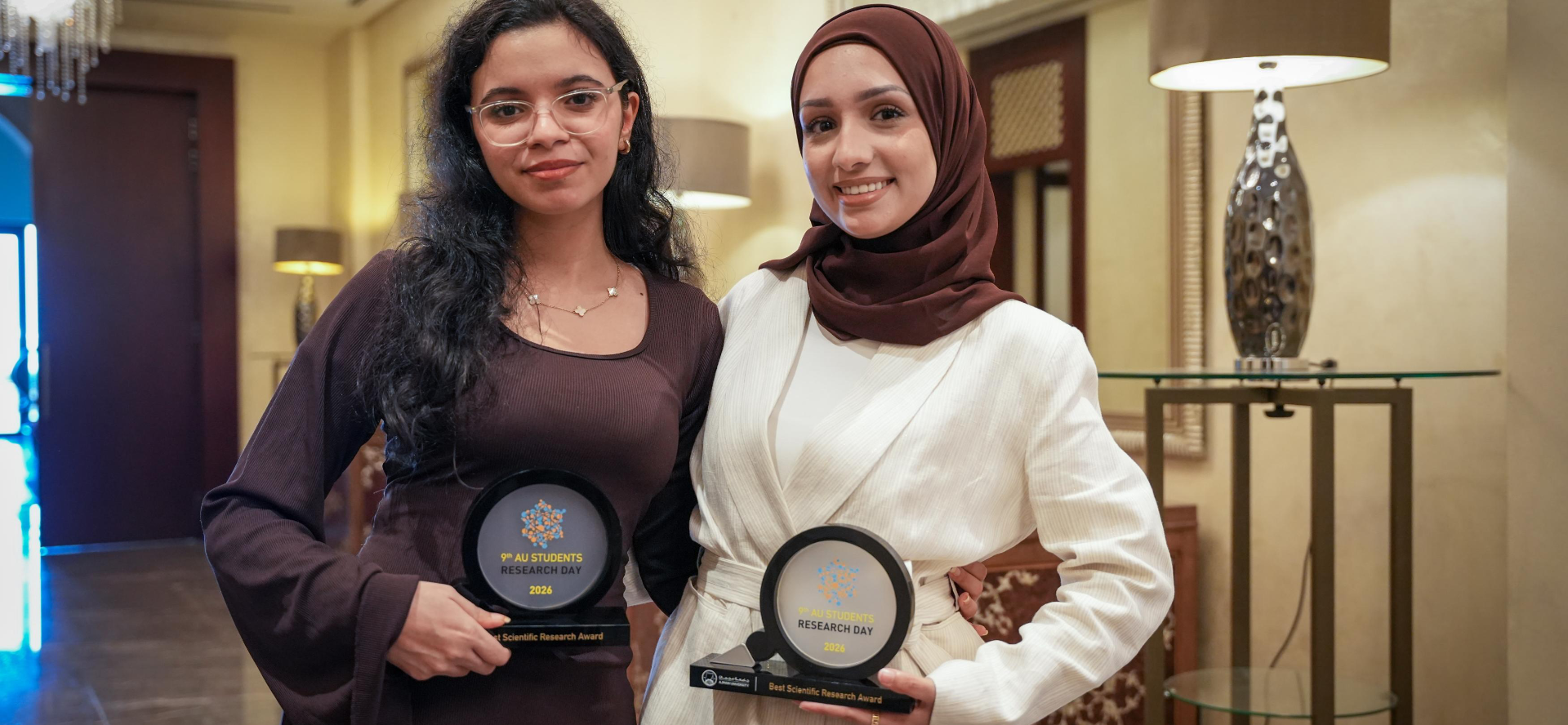
From artificial intelligence in clinical diagnosis to personalized healthcare, future employability and more livable cities, students at Ajman University are applying research to challenges that extend well beyond the classroom.
The university’s 9th Research Day brought together student researchers from across disciplines to present projects, exchange ideas and engage with faculty, experts and industry professionals. More than a showcase of academic work, the event reflected a growing emphasis on giving students opportunities to investigate real-world problems and translate knowledge into practical solutions.
Artificial intelligence emerged as a recurring theme, demonstrating how students are exploring its application across fields that might traditionally have had little in common.
In dentistry, student Douaa Salah developed an AI model to support the diagnosis and classification of Molar Incisor Hypomineralization (MIH) using intraoral scanner images. The model achieved high accuracy and was designed as a clinical decision-support tool for early detection and severity assessment.
Students Doaa Rafeq and Menaallah Hazem from the College of Pharmacy and Health Sciences explored the repurposing of metformin as an adjunct therapy for colorectal cancer alongside AI-based biomarker analysis. Their research led to the development of a platform designed to support biomarker-guided treatment selection and more personalized approaches to care.
Another student team developed MedGuard AI, a clinical decision-support system designed to detect drug–drug and drug–food interactions. Developed by Maysoon Adil Abbas Khalafalla, Raghad Ibrahim Mohammad Tarkhan, Sabrin Ibrahim Aman and Salma Roshadi Amin Alhannafi from the College of Engineering and Information Technology, the system uses artificial intelligence to generate predictions and personalized recommendations aimed at enhancing patient safety.
The application of AI extended beyond healthcare. Students from the College of Humanities and Sciences investigated how AI applications could influence future employment opportunities, examining their potential contribution to skills development and employability alongside challenges including training and language proficiency.
In business, students Sara Jendi, Yasmeen Salameh, Asmaa Ammourah, Lamis Hammami and Liyan Almasri examined the relationship between AI adoption by front-desk employees and customer satisfaction in the hospitality industry, exploring its implications for service quality and guest experience.
Other projects demonstrated the breadth of student inquiry beyond AI. College of Medicine students Abdulrahman Jamal Aakef, Ryan Darayseh, Aysha Al Shamsi and Hamda Alshehhi conducted a comparative study of direct oral anticoagulants and vitamin K antagonists in cerebral venous thrombosis, examining their efficacy and safety.
Architecture student Rana Jamal Al Dadah investigated pedestrian-centric urban planning and its potential contribution to more livable urban environments through a comparison of selected sites across the UAE. In mass communication, Mohammed Fouad Abdulmajeed Al-Taie presented the “343 System,” a multi-channel audiovisual installation examining the relationship between humans, machines and memory in the digital age.
Research Day also created an opportunity for students to move beyond presenting their findings. Participants presented their work before expert panels, received feedback and interacted with professionals, strengthening their ability to communicate research and consider its potential application beyond academia.
This exposure is an important part of developing future researchers. By bringing disciplines together, students can encounter different research methods and perspectives while recognizing connections between challenges in health, technology, business, society and the built environment.
The 9th Research Day reflects Ajman University’s broader approach to embedding research and innovation within the student experience. By creating opportunities for students to investigate meaningful questions, test ideas and communicate their findings, the university aims to develop graduates who are not only consumers of knowledge, but active contributors to its creation and application.