Universitas Airlangga News
Published on 3 September 2026




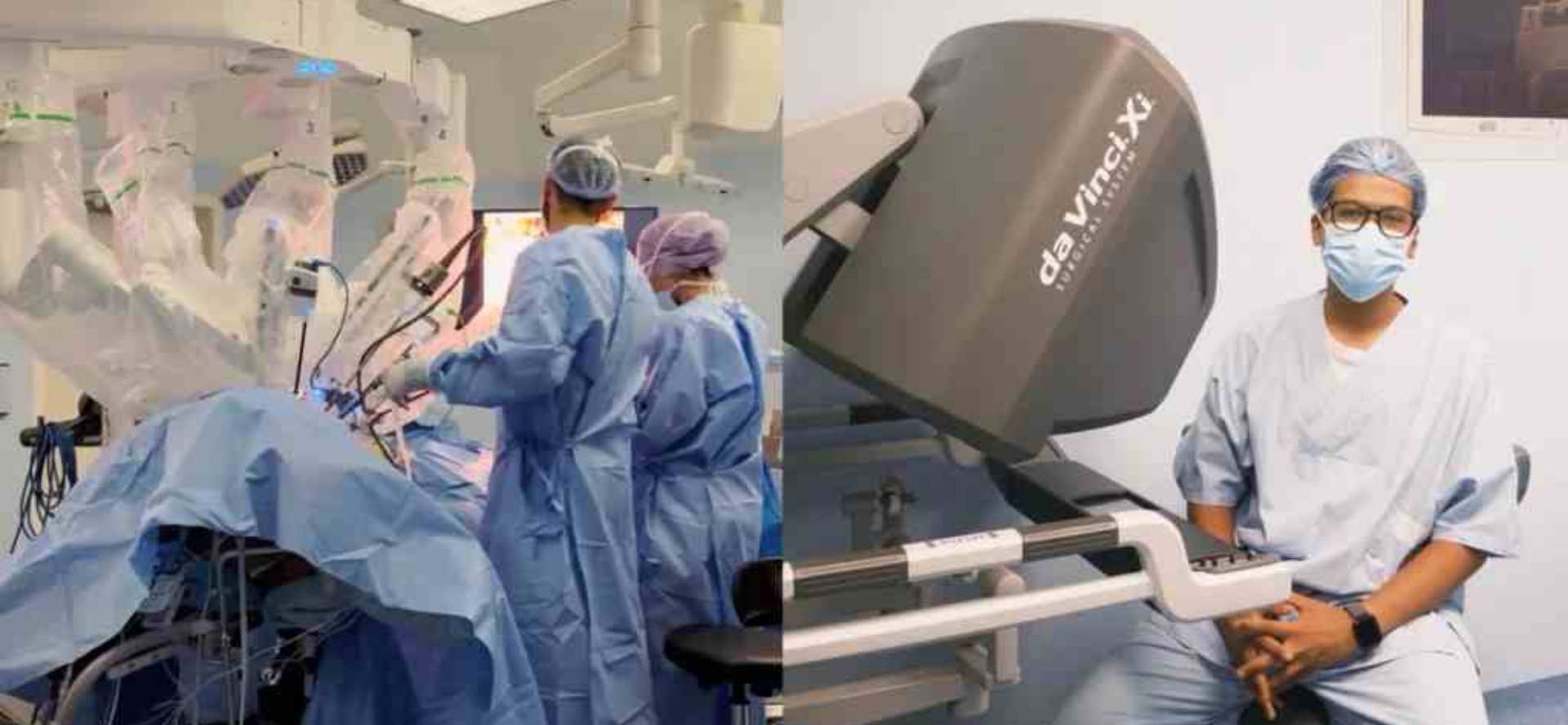
Medical student from Universitas Airlangga (UNAIR), Rizal Rachbini Mahlevi, had the opportunity to deepen his knowledge of robotic surgical technology in the Department of Urology at Ospedale Borgo Trento, Verona, Italy. The activity took place from July 27–31, 2026, as part of the student outbound program under the KKN Penyetaraan program through the Università degli Studi di Verona. The activity focused on learning about robot-assisted nephrectomy using the Da Vinci Xi robotic system. Through the program, Mahlevi gained experience observing the application of minimally invasive surgery in urological procedures, including kidney transplantation.
Mahlevi explained that his interest in urology was one of the reasons he chose to deepen his knowledge of robotic surgical technology. He noted that minimally invasive approaches have the potential to support faster patient recovery. “As technology continues to advance, surgical procedures are increasingly moving toward safer and minimally invasive approaches. These approaches benefit both patients and doctors by reducing surgical trauma and accelerating the recovery process,” he explained.
During the activity, Mahlevi joined patient visits to observe assessments and postoperative patient management, while also learning about robot-assisted surgery in kidney transplantation. He also had the opportunity to study laparoscopic mapping, the robot-assisted nephrectomy procedure, and the use of indocyanine green to assess renal tissue perfusion after transplantation.
According to Mahlevi, one of the key differences he observed while studying urology in Italy was the broader use of robotic technology. This provided healthcare professionals with more opportunities to develop their competencies in modern surgical technology. He hopes access to modern surgical technology in Indonesia can continue to be developed so that its benefits can reach more patients.
“I hope that the field of minimally invasive surgery in Indonesia can be further developed, both through enhancing the competence of medical personnel and expanding access to modern surgical technology,” he stated. As a closing statement, Mahlevi encouraged students who wish to join similar programs not to limit their learning to established systems. “Keep your curiosity alive, be willing to ask questions, engage in discussions, and seek new experiences. Make the most of every opportunity to build connections and broaden your knowledge as much as possible,” he concluded.