ritonga_86
Published on 3 September 2026




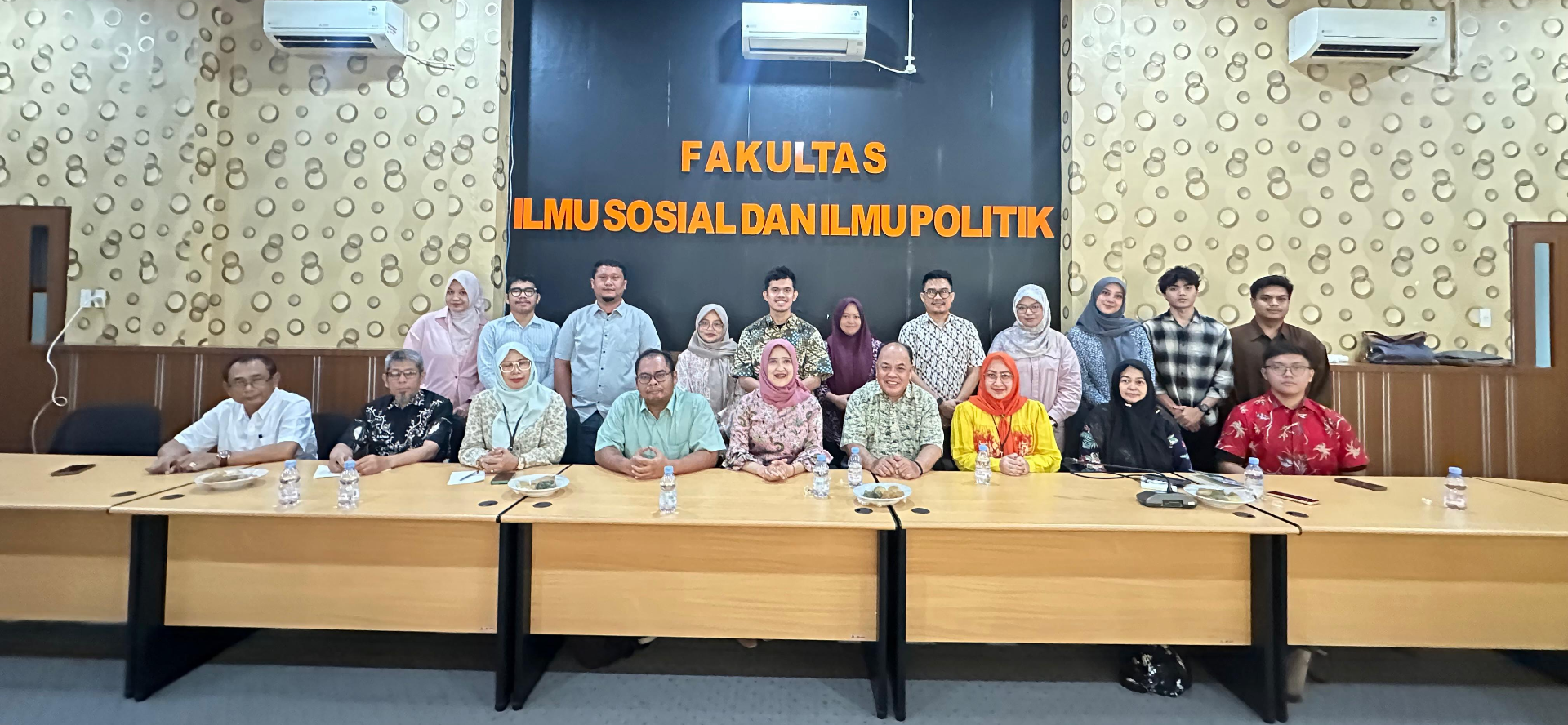
Social Welfare study programme at the Faculty of Social and Political Sciences (FISIP), Universitas Sumatera Utara (USU), held a Focus Group Discussion (FGD) to revise its Outcome-Based Education (OBE) curriculum, bringing together alumni, employers, students and lecturers to help shape the programme's graduate profile.
The FGD was held on Thursday, July 16, 2026, at the FISIP USU leadership meeting room. It was opened by Vice Dean for Academic, Student and Alumni Affairs Dr. Agus Suiadi, S.Sos, M.Si, and moderated by lecturer Randa Putra Kasea Sinaga, S.Sos, M.Kesos, with guidance from Head of the Social Welfare study programme Fajar Utama Ritonga, S.Sos, M.Kesos, and programme secretary Mia Aulina Lubis, S.Sos, M.Kesos.
Representatives from several government and social service institutions took part, including the North Sumatra Provincial Social Service, the Medan City Social Service, the Class 1 Correctional Supervision Agency (BAPAS) Medan, the Ministry of Social Affairs' Sentra Bahagia, two regional technical service units for child and youth welfare, and the NGO Lembaga Fokus.
The programme first adopted Indonesia's KKNI curriculum framework in 2017 before switching to an Outcome-Based Education (OBE) model aligned with the Merdeka Belajar Kampus Merdeka (Independent Learning Independent Campus) policy in 2021. This year's revision responds to Indonesia's Higher Education, Science and Technology Ministry Regulation No. 10 of 2026, which amends 2025 rules on higher education quality assurance and places greater emphasis on connecting classroom learning with industry and the workforce.
Input gathered through the FGD and a Google Form survey was used to define the programme's Graduate Profile and Graduate Learning Outcomes, aligned with standards recommended by the Indonesian Association of Social Welfare and Social Work Education (APKPSI). The process produced four graduate profiles: addiction social worker, social welfare/social work service programme manager, development companion for vulnerable groups, and social welfare researcher.
The revised curriculum also incorporates the Sustainable Development Goals into semester learning plans for individual courses, supporting the government's Key Performance Indicator 12 (IKU 12). Of the 17 SDGs, the programme is focusing on Goals 1 (No Poverty), 2 (Zero Hunger), 3 (Good Health and Well-Being), 4 (Quality Education) and 17 (Partnerships for the Goals).
FISIP USU said the curriculum update is intended to keep the Social Welfare programme responsive to changes in the education sector and the needs of the social work profession.