NCUSEC
Published on 13 August 2026




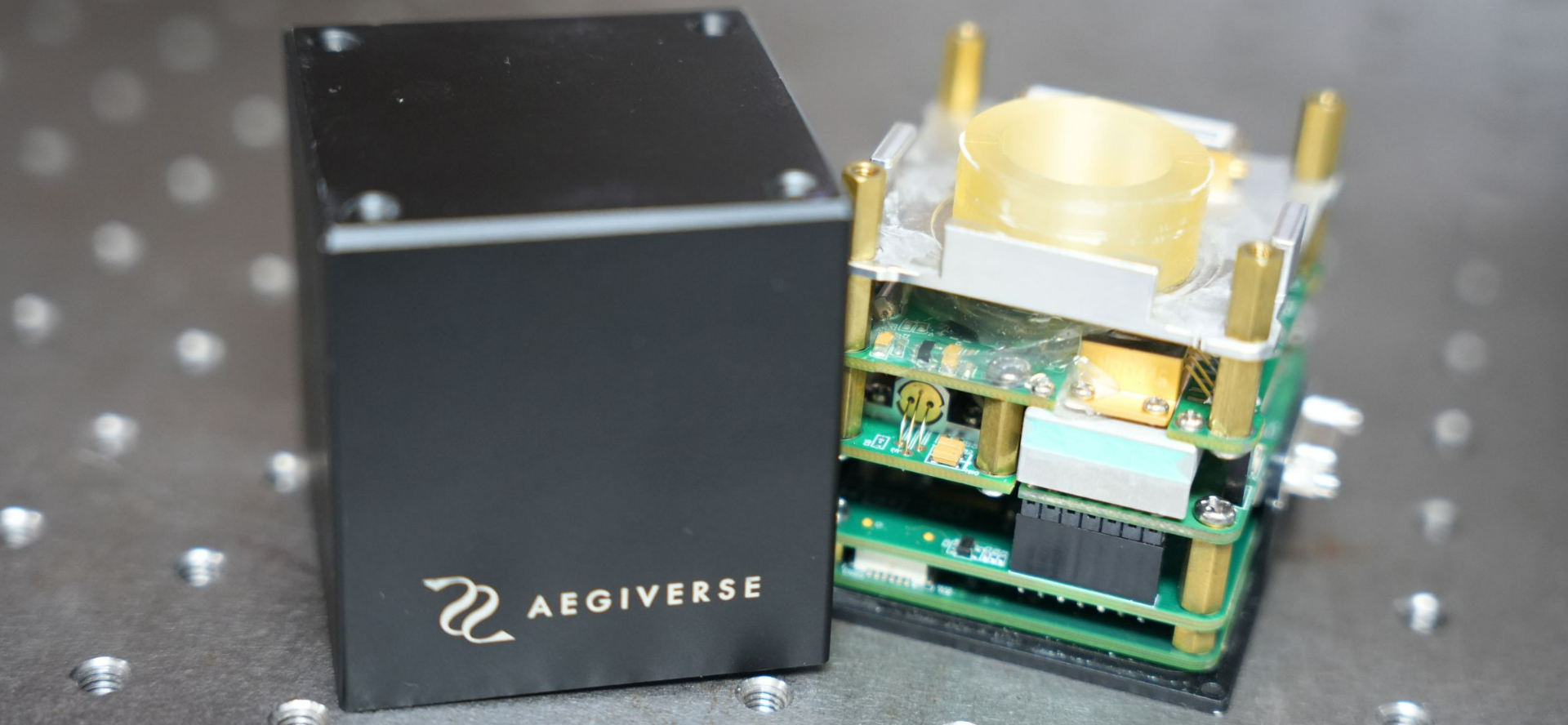
A Taiwan-developed fiber-optic gyroscope (FOG), a critical navigation sensor for satellites and spacecraft, has successfully completed its first in-orbit demonstration aboard the 3U CubeSat KOYO-1, marking a milestone for the country's growing space technology capabilities.
The satellite was developed through a collaboration led by National Central University (NCU), together with Taiwanese startup Aegiverse and Indian space startup HEX20. After establishing communications in orbit, the mission confirmed that the domestically developed fiber-optic gyroscope operates reliably in the space environment.
Fiber-optic gyroscopes are widely used for attitude determination and navigation in aircraft, launch vehicles, and satellites. Because they require highly precise optical sensing and signal processing, space-qualified systems remain dominated by a handful of countries. The successful flight demonstration represents Taiwan's first in-orbit validation of an indigenous fiber-optic gyroscope.
The achievement is the culmination of a 16-year research effort at NCU. Development began in 2009, followed by a successful suborbital rocket test of the core photonic integrated optical circuits in 2014. The project later expanded through collaborations between researchers in photonics and space science, eventually leading to the establishment of Aegiverse to commercialize the technology and develop satellite payloads.
Beyond testing the gyroscope, KOYO-1 will monitor subtle disturbances in low Earth orbit caused by variations in ionospheric plasma density. The observations are expected to improve understanding of ionospheric dynamics and contribute to space weather research.
Measuring just 30 centimeters in length, the CubeSat overall incorporates more than 50% Taiwan-developed technologies. The mission demonstrates not only the readiness of Taiwan's indigenous photonic sensing technology for space, but also the country's growing capability to develop advanced satellite systems through academia–industry collaboration.