SKKU
Published on 10 April 2026




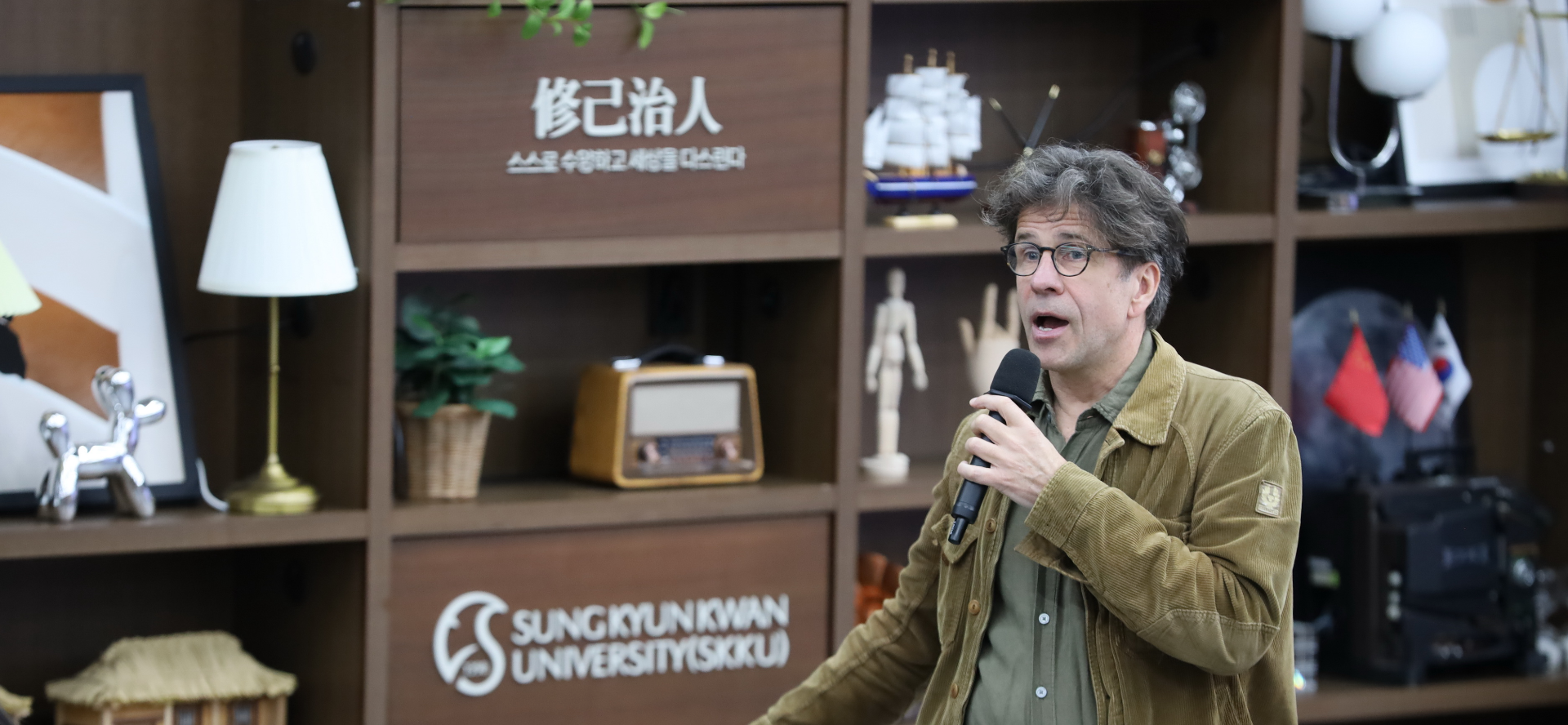
SKKU’s International Affairs Division and the Department of Social Welfare held the “Mindfulness for Life” talk concert on March 18, inviting Professor Willem Kuyken, a clinical psychologist at the University of Oxford in the United Kingdom. The event was organized to offer students who are experiencing psychological difficulties amid various concerns such as academics, career paths, and interpersonal relationships a new perspective and practical support through mindfulness.
Professor Kuyken is a world-renowned authority in the field of mindfulness-based cognitive therapy (MBCT) research and has been actively conducting studies on the prevention of depression and anxiety and the promotion of mental health. In his lecture that day, he explained how mindfulness helps people recognize and accept present experiences as they are and introduced practical ways to ease recurring cycles of negative thoughts and emotions.
In the session that followed, in-depth discussions were conducted around three cases based on students’ concerns collected through a pre-event survey. In particular, Professor Sungmin Yoon of the Department of Social Welfare participated in this session together with Professor Kuyken, enabling a more extensive discussion. The first case presented a perspective that viewed “rest” not as failure but as part of sustainable growth through the experience of a student who repeatedly set excessive goals and experienced burnout. The second case focused on how to understand one’s identity and values separately amid achievement-centered self-perception and career-related anxiety. Finally, through a case involving loneliness and disappointment in interpersonal relationships, the importance of mindfulness in finding balance in relationships with others and caring for oneself was emphasized.
For each case, Professor Kuyken and Professor Sungmin Yoon presented ways for students to view their emotions and thoughts more flexibly from the perspective of mindfulness, and attendees took time to reflect on and empathize with their own experiences.
During the Q&A session that followed, students continued to participate actively, raising questions on a wide range of topics, including mindfulness-based cognitive therapy (MBCT), career concerns, and methods of emotional regulation. The speaker drew a strong response by empathizing with each student’s situation and offering practical advice.
The International Affairs Division and the Department of Social Welfare, which co-hosted the event, expressed their hope that the program served as an opportunity for students to view the anxiety and concerns they had felt only vaguely from a new perspective. They also stated that they plan to continue organizing a variety of programs that can support students’ growth in the future.