NCUSEC
Published on 17 March 2026




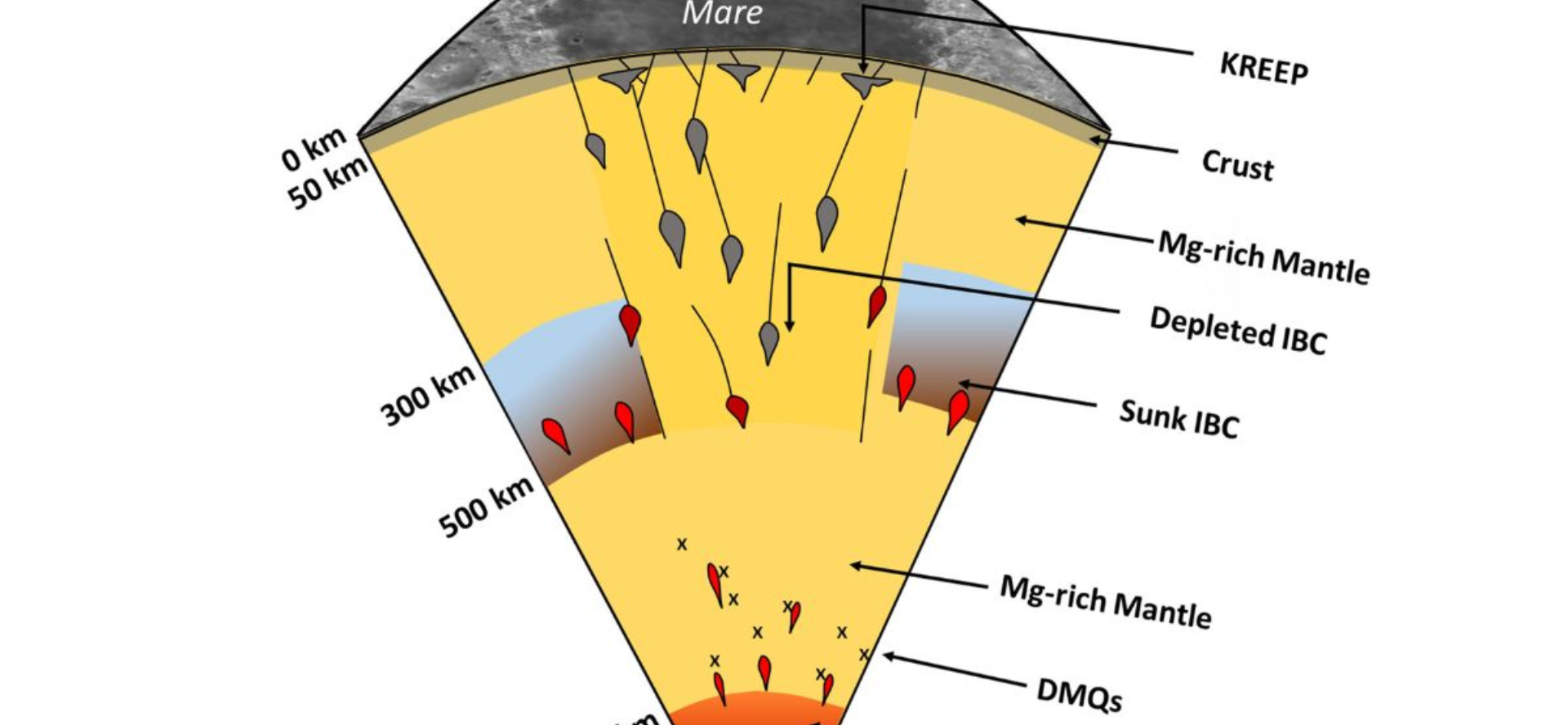
The research applies a mature electromagnetic exploration technique widely used in Earth sciences—Geomagnetic Depth Sounding (GDS)—to analyze natural magnetic field disturbances experienced by the Moon when it passes through Earth’s magnetotail. As variations in the external magnetic field penetrate the lunar interior, their propagation characteristics are influenced by subsurface electrical conductivity structures. By analyzing these magnetic variations, researchers can invert for the resistivity distribution at different depths within the Moon, allowing them to infer its composition and thermal state.
Notably, part of the magnetic field data used in this study originated from original magnetic tapes recorded during the Apollo missions. After the missions ended, these tapes were stored in archives for decades and were nearly forgotten. In recent years, scientists rediscovered these more than forty-year-old datasets while reorganizing Apollo mission archives. Through modern digital restoration and reconstruction techniques, the historical lunar observations have been revived and made available for new scientific analysis.
Professor Chang noted that the research is also closely related to the Lunar Vector Magnetometer (LVM) mission currently being developed at NCU under commission from the Taiwan Space Agency (TASA). Deploying a new generation of electromagnetic instruments on the lunar surface would enable scientists to resolve the Moon’s deep interior structure and thermal evolution with greater precision. The study not only deepens our understanding of the Moon’s interior but also provides important scientific foundations for future in-situ electromagnetic exploration missions, highlighting NCU’s growing international influence in planetary geophysics and deep-interior exploration research.