

FikriHaikal
Published on 7 April 2026





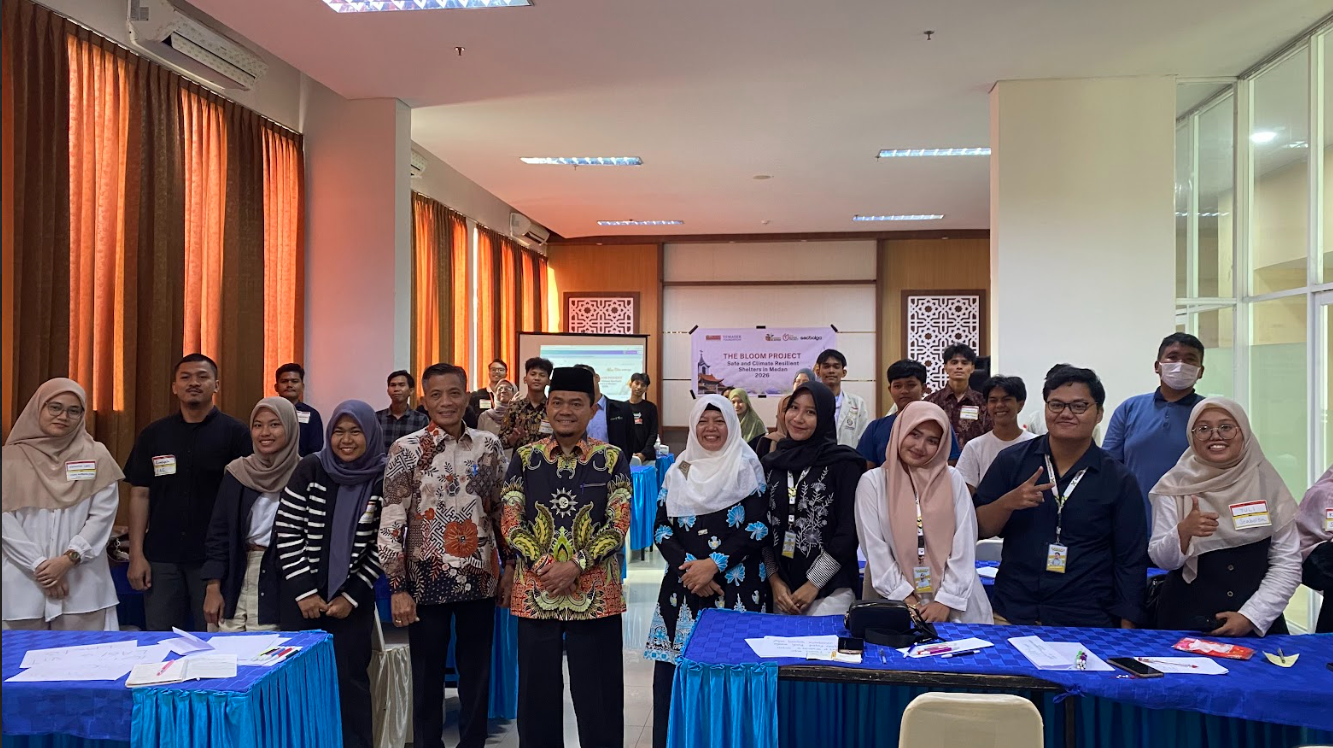
The role of women and grassroots communities continues to gain attention in efforts to strengthen climate resilience. This was reflected in a Focus Group Discussion (FGD) titled The Bloom Project: Safe and Climate Resilient Shelters in Medan 2026, coordinated by Yuli Efriani, founder of Seabolga and an alumna of the Environmental Engineering program at Universitas Sumatera Utara, bringing together interfaith communities to discuss climate change, disaster preparedness, and community-based resilience.
As part of the Harmony in Action initiative by the Wahid Foundation and Temasek Foundation, the Bloom Project focuses on strengthening the capacity of interfaith communities in disaster preparedness. The initiative also encourages houses of worship to function as centers for protection and social activities for surrounding communities.
Participants highlighted the importance of collaboration in building a society that is more resilient to various disaster risks. The discussion emphasized that resilience is not only built through infrastructure, but also through strong community engagement and shared responsibility.
According to Laila Sari, founder of the Ila Education Foundation and a family education coach, women play a crucial role in addressing a wide range of issues, particularly those related to disasters. She noted that women often take on leadership roles within families and communities, making them key agents in disaster mitigation and recovery efforts.
Women are capable of overcoming many obstacles, especially in times of emergency. They can play a significant role in disaster mitigation and post-disaster recovery by empowering themselves and guiding their families and communities,” she said.
She also emphasized that the true strength of a community lies at the grassroots level. When individuals at this level take initiative, coordination becomes more effective and solutions can be implemented more quickly.
“We see that the greatest strength lies within grassroots communities. Once they start moving, it becomes easier to organize efforts and improve people’s lives,” she added.
Laila further explained that women’s involvement is essential, as they often lead within family structures and influence broader community participation. Their initiative can help mobilize collective action more effectively.
“Women are like the heart. When the heart pumps blood, it sustains life and enables many functions. In the same way, women often become the driving force of family and community life,” she said.
Through initiatives like the Bloom Project, there is a growing emphasis on shifting from reactive disaster response to preventive measures. Environmental awareness, waste management, and social responsibility are encouraged to begin within families and be strengthened through community action.
By fostering interfaith collaboration and empowering women-led grassroots movements, such initiatives are expected to contribute to building more resilient and inclusive communities in Medan, better prepared to face the ongoing challenges of climate change.

