Aidil Ibrahim
Published on 3 March 2026





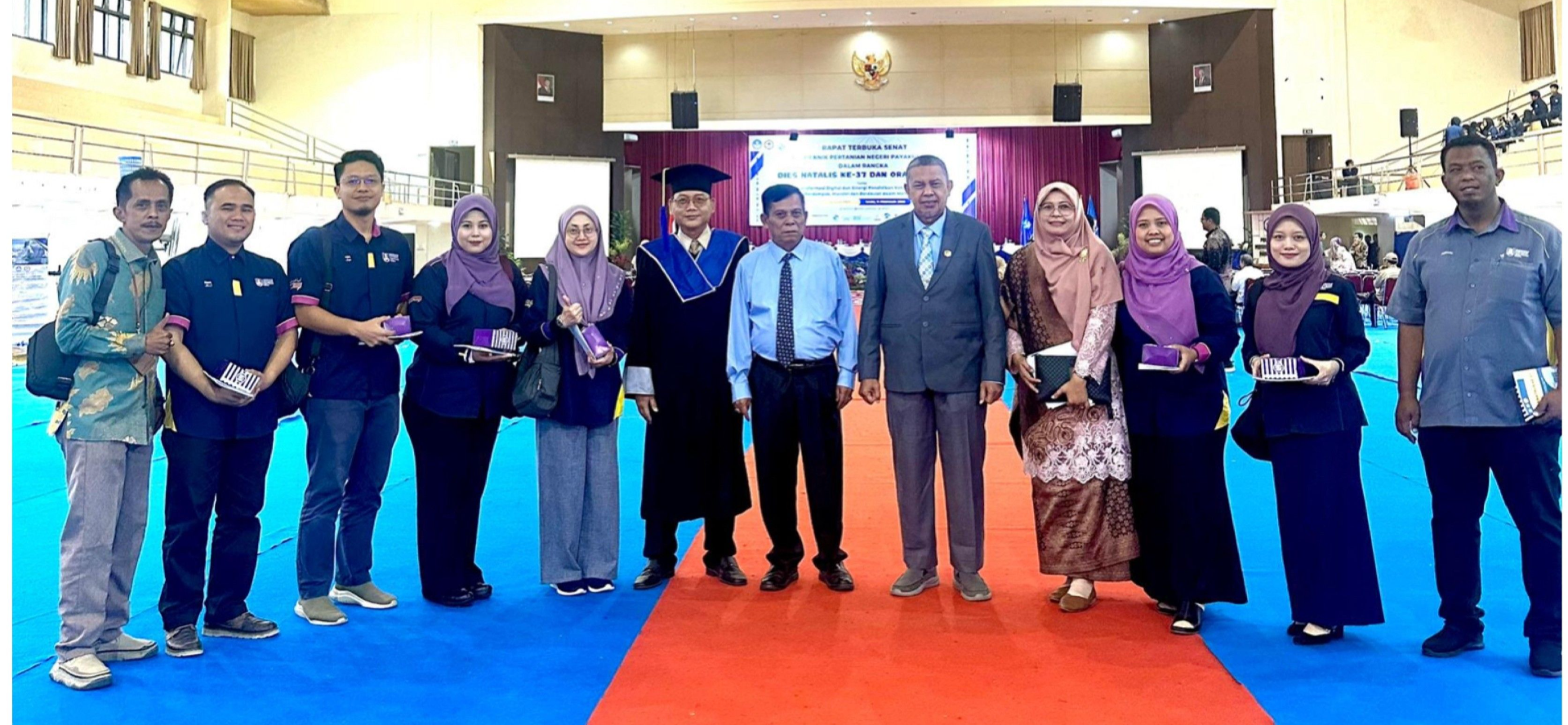
The Culture Bank Unit of UiTM Cawangan Negeri Sembilan recently undertook an academic and community engagement visit to Politeknik Pertanian Negeri Payakumbuh (PPNP) in West Sumatra, Indonesia, reinforcing institutional ties and expanding opportunities for cross-border collaboration in research, laboratory governance, and social responsibility.
The visit brought together lecturers and laboratory personnel from both institutions. The programme began with a research lecture session where representatives from UiTM shared current work related to biotechnology applications, microbial technology, and sustainable agricultural projects. This was followed by a laboratory management lecture focusing on best practices in biosafety, equipment maintenance, and efficient research workflow systems, which are believed to be crucial areas for strengthening institutional research ecosystems.
A guided laboratory site visit enabled UiTM delegates to observe the facilities at the host campus in Payakumbuh, encouraging knowledge exchange on laboratory organisation and technical operations. From the visit, there is a great potential to develop PPNP’s very own Microbe Culture Bank Unit to facilitate microbial cultures for academic purposes. The delegation also had the honour of participating in the 37th anniversary celebration of PPNP, an event that highlighted its role in advancing agricultural education and community development within the region.
Beyond academic exchange, the programme emphasised community impact through a University Social Responsibility initiative. UiTM representatives conducted a knowledge-sharing session on stingless bee farming, introducing practical techniques for sustainable honey production and small-scale entrepreneurship. In return, the host institution organised a hands-on workshop on demonstrating the production of salted duck eggs, a traditional value-added food product with strong local economic potential.
Through direct dialogue, shared lectures, and hands-on observation, both UiTM and PPNP strengthened their capacity to align research priorities, refine laboratory governance, and enhance technical training for staff members. The exposure to differing laboratory systems, safety cultures, and operational workflows is expected to inform improvements in equipment management, documentation practices, and research support structures at both institutions. More importantly, the visit fostered professional networks that enable continued consultation, joint initiatives, and future mobility programmes. Such outcomes demonstrate how academic visits, when grounded in practical knowledge exchange, can move beyond symbolic partnership to produce tangible improvements in research productivity, laboratory efficiency, and institutional resilience across the region.