SKKU
Published on 9 March 2026





The Redemption of a Ritual: How Gen Z Revived a 600-Year-Old Ceremony in Seoul
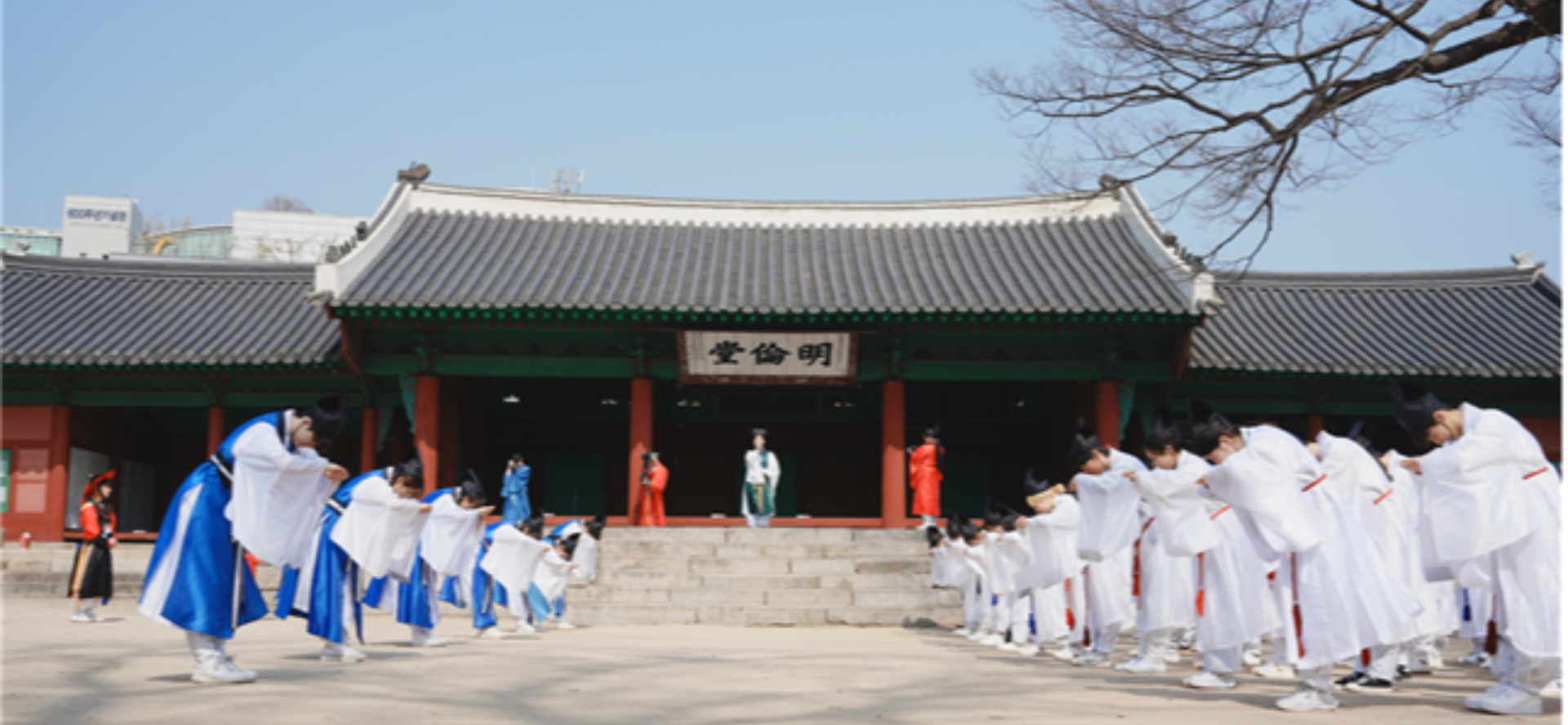
Beneath the ancient, sprawling gingko trees of Sungkyunkwan University (SKKU), the air doesn't hum with the usual bass of a modern freshman party. Instead, it echoes with the rustle of blue silk robes and the formal, rhythmic greetings of a 14th-century royal court.
This is Shinbangrye: a scholar’s welcoming ritual rooted in the Joseon Dynasty. For SKKU, which was founded in 1398 as the peninsula’s highest seat of learning, this is not a dusty history lesson. It is a high-stakes, gamified "redemption" of a tradition that once turned dark.
The Dark Legacy of the "Myeonsinrye"
For centuries, the entrance into Sungkyunkwan—Korea’s highest national institution of learning—came with a price. Known as Myeonsinrye (an initiation to "exempt the newcomer from being a stranger"), the ritual was originally intended to build community. However, over the years, it evolved into a feared tool of dominance.
By the middle of the Joseon era, the tradition had grown toxic. Senior scholars often forced newcomers to perform humiliating tasks or provide expensive banquets, a practice so severe that Korean kings once issued royal decrees to ban it. It was a 15th-century version of the "hazing" crisis that plagues modern Western campuses today.
The Gen Z "Debug": From Hazing to Quests
In the spring of 2026, the students of SKKU—led by the student organization Cheongrang—decided that history was too valuable to cancel, but too flawed to ignore. Their solution? A total "reboot" of the ritual through the lens of modern empathy and storytelling.
The "2026 Shinbangrye" replaced the vertical power dynamics of the past with a horizontal, collaborative mission:
The Voice of the Tradition’s New Guardians
For the students of South Korea’s most historic campus, the event serves as a rare bridge between a high-tech future and a prestigious past. Han In-young, the student leader (Jang-ui) of Cheongrang who oversaw the event, emphasized the symbolic importance of this continuity.
"Built upon a long history and affection for the community, we expect this event to become a meaningful starting point for freshmen to experience the deep roots and spirit of Sungkyunkwan, and remain a precious memory that everyone can enjoy together as one." Han said.
As the spring sun sets over the stone courtyards, it becomes clear that these students are reviving the past in ways never expected. In a world often fractured by rapid digital change, SKKU’s Gen Z are proving that we can remain connected to our ancestors through a glimpse of current thinking and modern motivation. They are not merely reciting history; they are debugging it—showing that the keys to solving the repeating issues of our present, such as social isolation or the search for belonging, can often be found hidden in the wisdom of the past. By looking back with empathy, they haven't just saved a tradition; they’ve discovered a timeless solution for moving forward.