


duyvo191
Published on 26 January 2026





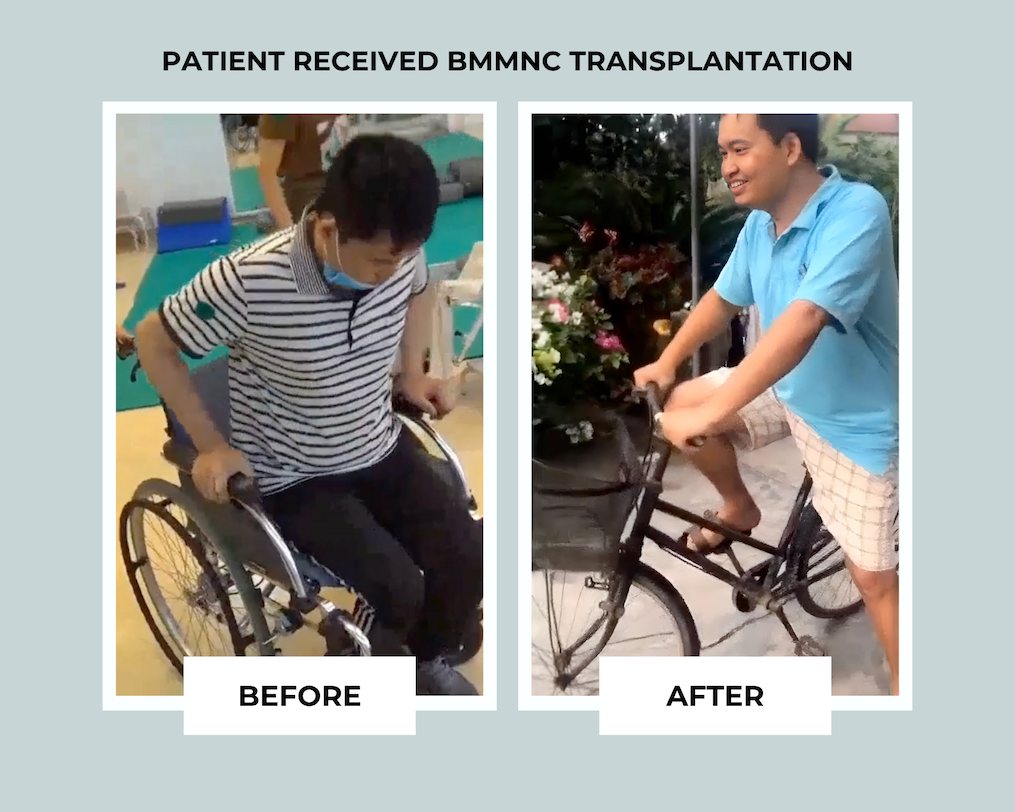
Every second, two lives are changed forever by a traumatic brain injury (TBI) (Dewan et al., 2018). Many will live; but never fully recover. For millions, the aftermath is a life defined by loss: of movement, memory, and independence. Despite decades of research, no treatment has yet proven capable of reversing chronic neurological damage, until now.
In Vietnam, a pioneering study is charting a new path for neuroregenerative medicine.
Led by VinUniversity in collaboration with Vinmec Healthcare System, Hanoi Medical University, and the National Rehabilitation Hospital, researchers have completed one of Asia’s first matched-control clinical trials exploring autologous bone marrow mononuclear cell (BMMNC) therapy for chronic TBI. The results, recently published in Brain Communications (Oxford Academic), suggest that cell-based therapy, made in Vietnam, could become a new frontier in restoring brain function.
The clinical trial involved 50 patients living with long-term neurological sequelae after TBI. A matched-control design is adopted to ensure scientific rigor. This approach is rarely implemented in stem cell research for chronic TBI.
The intervention group received two intrathecal infusions of bone marrow mononuclear cells, six months apart, combined with rehabilitation therapy, while the control group received rehabilitation therapy only. All participants were followed up for 12 months to assess safety and effectiveness by employing the Functional Independence Measure, Short Form-36 Quality of Life Questionnaire, and Glasgow Outcome Scale–Extended, alongside advanced neuroimaging (MRI, PET-CT).
After 12 months of follow-up, results are remarkable:
Yet the true impacts are beyond numbers. They are seen in patients once confined to bed, taking their first steps again, or those regaining their smiles. Each recovery tells a story of dignity restored and hope renewed.
For Vietnam, this milestone marks more than clinical success. It positions the country as an emerging powerhouse of high-quality translational research and regenerative medicine in Asia. It is becoming a research hub capable of designing, leading, and publishing globally recognized clinical studies that meet international standards.
“This work represents not only scientific innovation, but also a commitment to equitable access to advanced therapies,” shared Professor Nguyễn Thanh Liêm, MD, PhD, Director of Vinmec Institute of Stem Cell and Gene Technology. “It shows that world-class regenerative medicine can be developed in Vietnam, for patients everywhere.”
By integrating stem cell science, advanced imaging, and rehabilitation medicine, the study showcases the power of academic–clinical collaboration across institutions, a model VinUni, Vinmec, and other institutions are scaling to accelerate future discoveries.
As the world seeks solutions to the growing burden of neurological disability, Vietnam’s contribution offers a compelling case for Made-in-Vietnam science, research that not only meets global rigor, but also addresses local health priorities.
For VinUni, the study embodies its mission to advance knowledge that transforms lives, turning scientific potential into real-world healing, and placing Vietnam on the global map of regenerative medicine.
“We are not just treating injuries,” Professor Nguyễn Thanh Liêm, MD, PhD, shared. “We are rebuilding hope, neuron by neuron, step by step.”
Dewan, M. C., Rattani, A., Gupta, S., Baticulon, R. E., Hung, Y.-C., Punchak, M., Agrawal, A., Adeleye, A. O., Shrime, M. G., & Rubiano, A. M. (2018). Estimating the global incidence of traumatic brain injury. Journal of neurosurgery, 130(4), 1080-1097.

