Jiovanie Munthe
Published on 19 January 2026






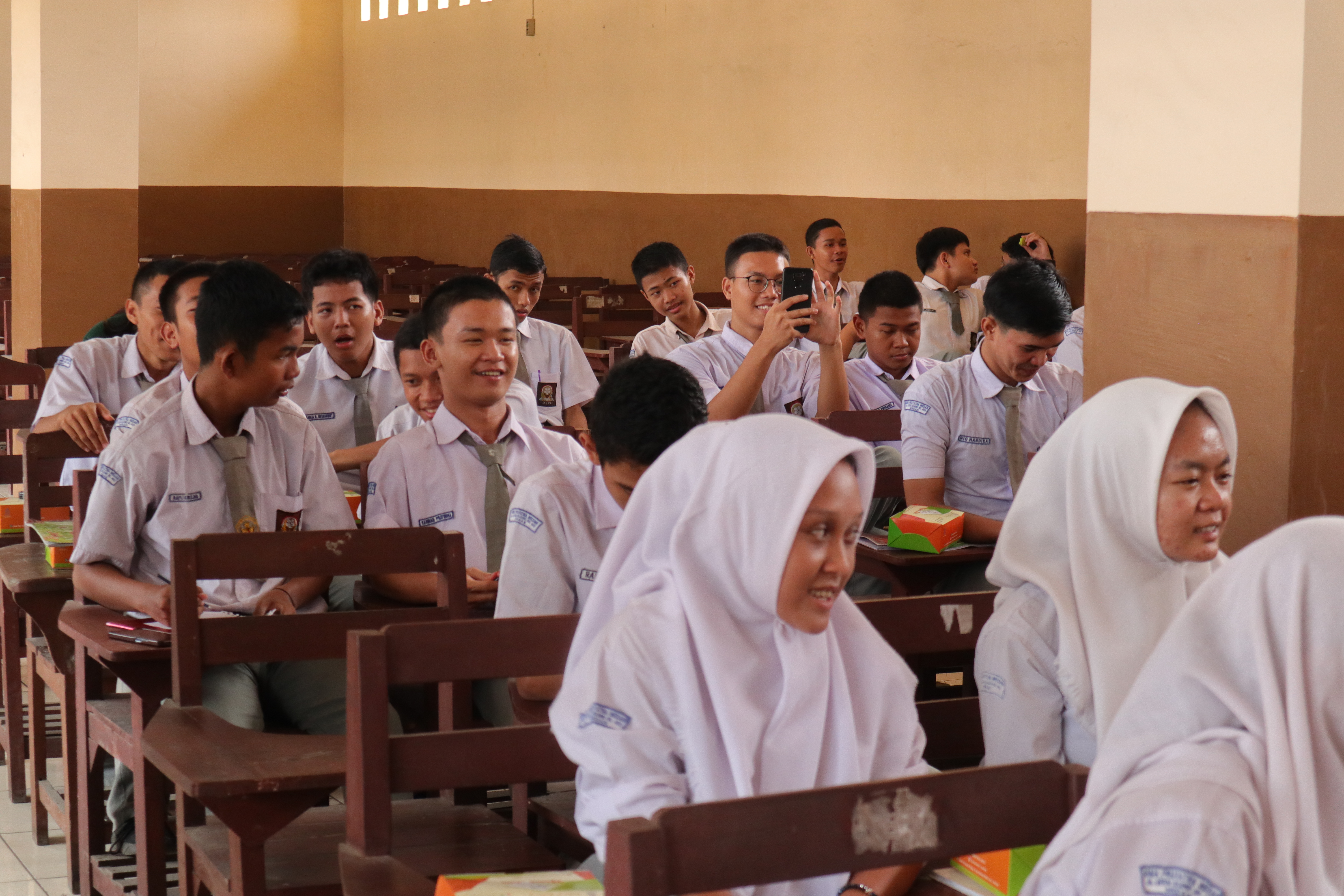
Inside a journalism classroom at the Faculty of Social and Political Sciences, Universitas Sumatera Utara (FISIP USU), only four seats are filled for the 2023 journalism cohort. In 2022 there were nine, and two years before that, eighteen. These steadily shrinking numbers seem to hold a bigger question: why are fewer young people choosing to study journalism, at a time when the world arguably needs credible information and professional journalists more than ever?
For many students, choosing journalism feels like choosing a lonely road. One journalism student shared that she often has to answer questions like, “Why bother becoming a journalist when everyone can make news on social media?” Most of her classmates opt for public relations or advertising—paths seen as more “secure” career-wise.
“I still believe journalism matters, but honestly, the idea of becoming a journalist scares me a bit. The pay is low, the risks are high, and even my parents asked me to reconsider,” she said.
This worry is not unique to Universitas Sumatera Utara (USU). Across campuses in Indonesia, the number of students majoring or concentrating in journalism continues to fall. Antara News (2023) reported that several major universities now have fewer than ten journalism students per cohort. The trend isn’t exclusive to Indonesia either: a Pew Research Center survey (2022) in the United States found that 72% of young people prefer jobs in digital creative industries over traditional newsrooms.
The media industry itself is in turmoil. Print advertising revenue keeps plummeting, while online outlets compete fiercely with social media algorithms. Many newsrooms have downsized; some have shut their doors entirely.
Meanwhile, the content creator profession appears far more promising: higher potential income, flexible hours, easier visibility. It’s no surprise that many young people are reconsidering their options.
And yet, in this age of information overload, journalism’s role is more vital than ever. The World Press Freedom Index 2024 emphasizes that democracy cannot survive without free and high-quality journalism.
“Journalistic ethics are our foundation. They guide journalists in the field to produce accurate, balanced reporting that does not harm others,” said Adi Warsidi, a member of AJI Indonesia, as quoted by WASPADA during a journalist consolidation event in Bireuen.
Views on journalism aren’t exclusive to communication students. Rezkina, a non-journalism student at USU, said she chose public relations over journalism.
“In my opinion, public relations has better career prospects. I also like that I can get involved directly in various field activities. Journalism feels narrower, like it’s only tied to media. But I know some journalism graduates who ended up working in PR because the skills are still related,” she explained.
Still, she added that both journalism and PR have potential—she simply sees PR as more promising.
Zahra, a journalism student at USU, admits her choice wasn’t free of doubts. “From the start, I felt journalism suited my abilities. I already imagined how closely this major is tied to the world of reporting,” she said.
The challenge, she noted, is the intense competition—especially in a tech-driven era. “Now anyone can spread ‘news’, even without learning ethics. But that’s exactly where our value lies. We can tell which reports are real and which are just sensational. That’s why journalists are still needed.”
For Zahra, technology may enable “instant journalists,” but people will still seek information from credible sources. “Compared to people who just make things up, journalism graduates are far more trusted. So I believe journalism will keep its strategic place.”
Meanwhile, Haninah chose journalism because of her love for writing, a passion honed through student press activities.
“For me, journalism isn’t just a profession—it’s a moral responsibility. We have to be brave, sensitive, and committed to ethics. The challenge isn’t only technical; it’s about staying honest when so many interests are at play,” she said.
Her biggest realization came during her internship. “There were so many things I hadn’t understood before. Journalism taught me to appreciate life more, to be more inclusive. I hope I can become a bridge between people through the information I deliver.”
But Haninah also stressed that the sustainability of this profession can’t rely solely on student idealism. “The government must create safe spaces for journalists, and the public must stop normalizing bribery. Everyone has a role if we want journalism to survive.”
Even as students turn away from it, journalism remains the backbone of communication studies. Without basic journalistic skills—accurate writing, research, critical interviewing, and data processing—communication would lose its depth. Even new professions like content strategists or social media managers rely on the same fundamentals.
In this post-truth era, professional journalists are increasingly essential. They are the ones who can verify facts, distinguish opinion from information, and maintain a healthy public sphere. As Bill Kovach and Tom Rosenstiel wrote in their classic book The Elements of Journalism: “Journalism’s first obligation is to the truth.”
The question is: will journalism remain relevant? The answer depends on how well journalism education adapts. If universities continue to innovate—integrating technology, creating collaborative spaces with industry, and emphasizing critical thinking—journalism won’t just survive; it will become even more important.
But if journalism is only seen as “a pathway to an empty newsroom,” student interest will keep declining.
Inside that quiet classroom, a handful of students still sit, open their notebooks, and write down their dreams about the future of journalism. Their number may be small, but the role they choose is immense: safeguarding democracy, fighting disinformation, and witnessing history.
In an era where everyone can speak but not everyone can be trusted, journalism may be losing applicants—but it has never lost its relevance.