Sogang University
Published on 3 March 2026





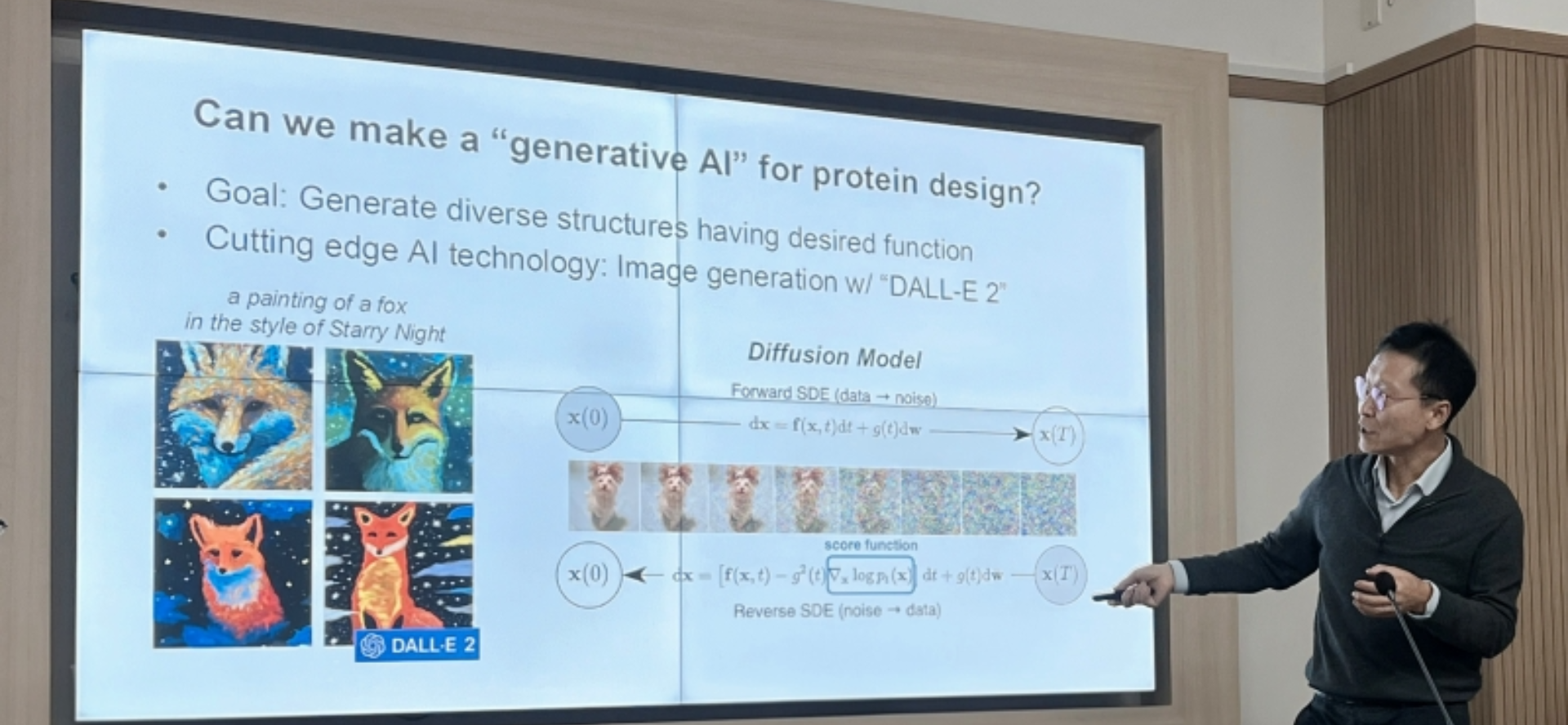
Sogang University held its February brown-bag seminar under SAIX Peers (Sogang AIX Peers), focusing on the convergence of artificial intelligence and biotechnology in next-generation drug development. The session featured Professor Seong-Ryong Kim from the Department of Life Science and CEO of the university-affiliated venture PhytoMab, who delivered a lecture titled “Universality of Biomolecules and the Evolution of Antibody Therapeutics: AI Design and Plant Cell-Based Production.”
Professor Kim outlined key biological foundations underlying AI-driven drug discovery, explaining how amino acid sequences generate vast structural diversity through protein folding. He emphasized that this molecular complexity creates an expansive design space in which AI technologies can significantly accelerate therapeutic innovation.
The seminar highlighted two central themes. First, AI-assisted antibody design enables rapid generation and screening of candidate sequences, addressing one of the most time-intensive stages of pharmaceutical development. Recent advances in protein structure prediction, supported by large experimental datasets, have significantly improved computational accuracy and expanded the scope of AI-designed proteins. Second, Professor Kim introduced PhytoRice, a plant cell–based antibody production platform developed by his team. By applying glycoengineering technologies to rice cells, the platform offers a safer and more cost-effective alternative to conventional CHO (Chinese Hamster Ovary) cell systems, which require expensive culture media and stringent viral safety controls.
As a case study, he presented “Hugreen,” a plant-derived antibody candidate corresponding to the breast cancer therapy trastuzumab, developed in collaboration with domestic and international research partners. While highlighting AI’s potential to reduce the cost and timeline of drug development, Professor Kim underscored that laboratory validation, purification, and clinical evaluation remain indispensable steps in translating computational designs into viable therapeutics.
The session prompted active interdisciplinary discussion on how AI can address key bottlenecks in pharmaceutical innovation, reinforcing Sogang’s commitment to advancing meaningful AI convergence across scientific disciplines.